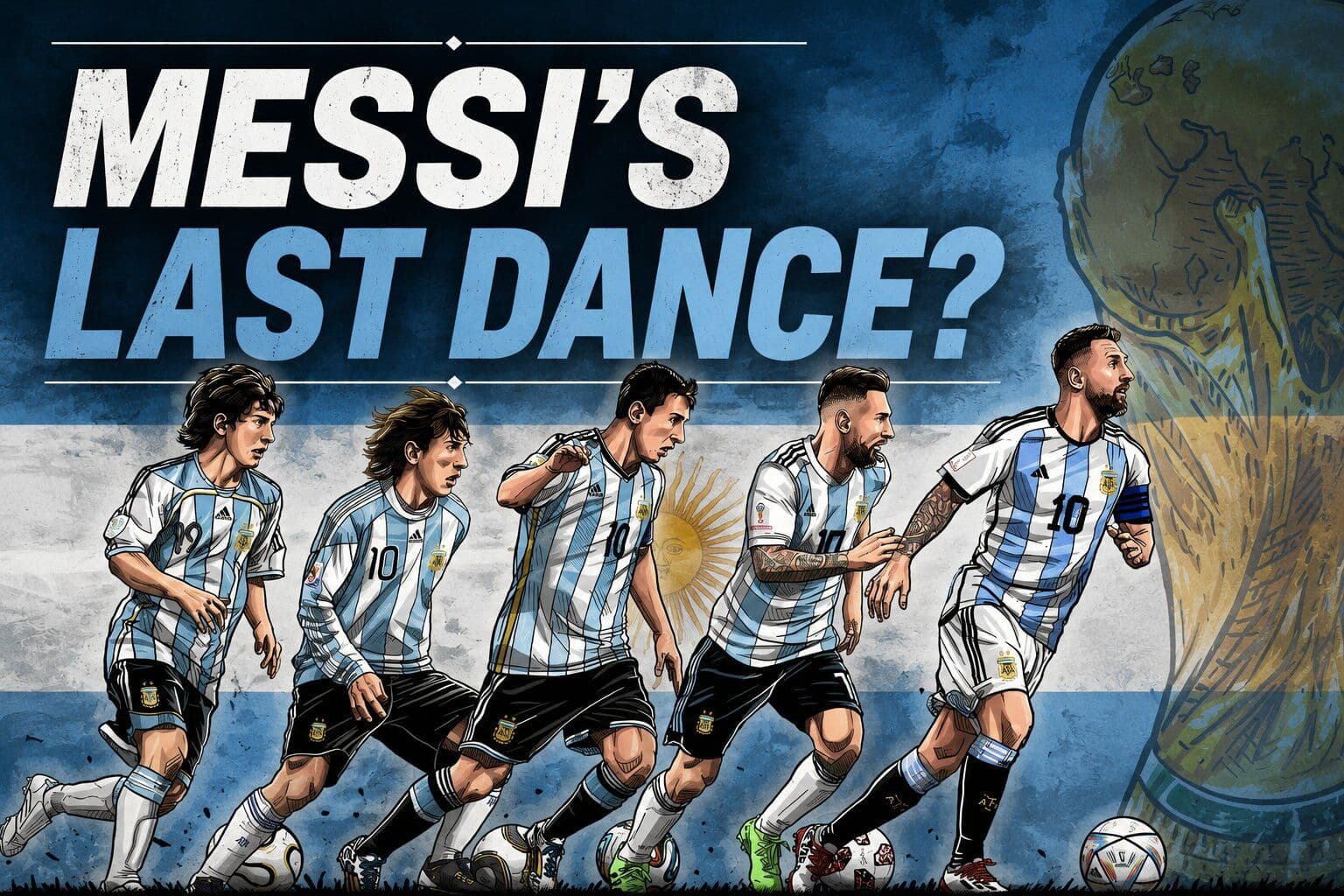
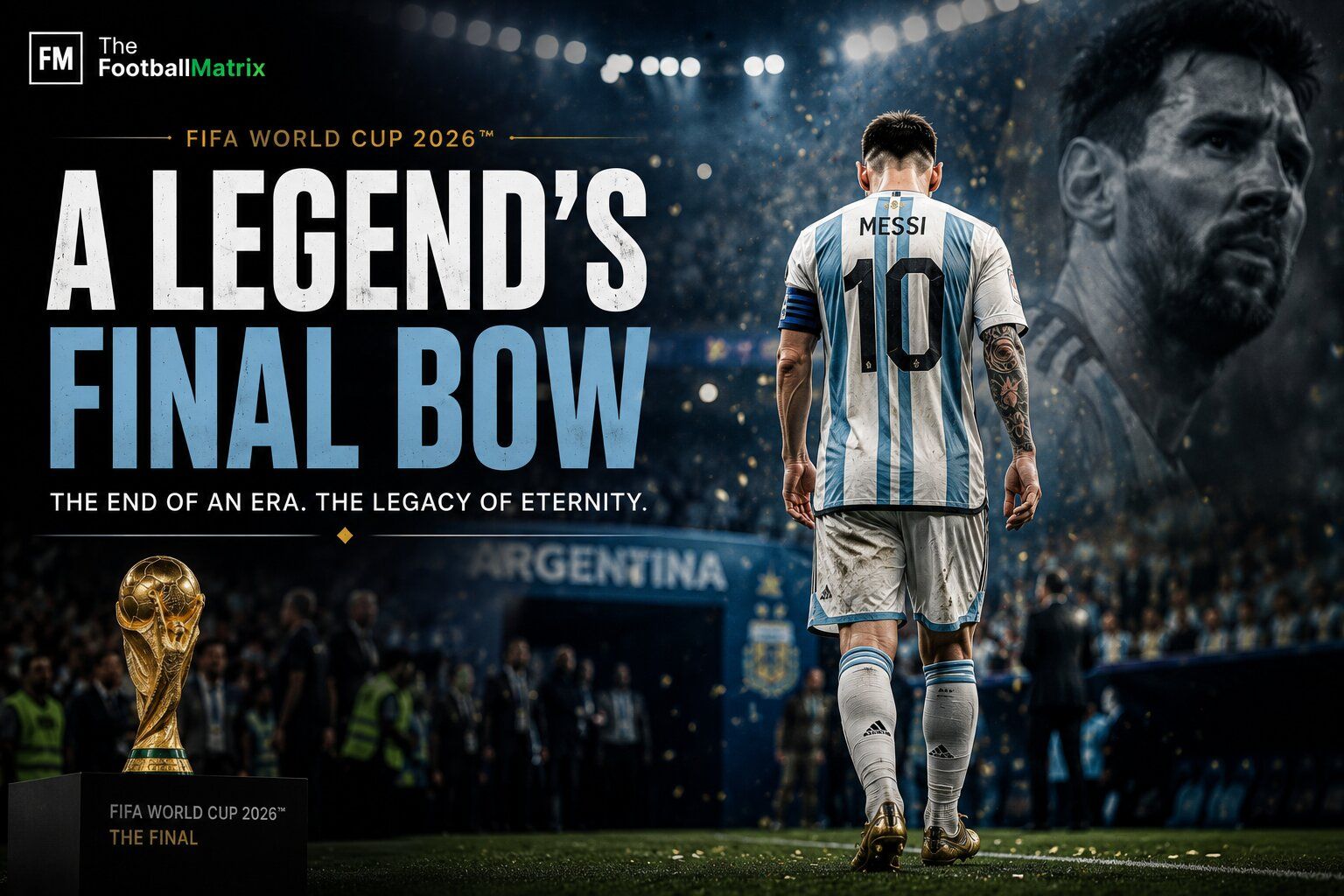
The lights above MetLife Stadium had barely dimmed before the debate started: was that it? Was that the last time we would watch Lionel Messi wear the Argentina shirt in a World Cup?
Spain lifted the trophy in extra time, denying Argentina back-to-back titles and depriving the sport of its storybook ending. However, if you spent the night arguing about the scoreline, you missed the point entirely. At 39, in a 48-team tournament designed to punish aging legs with extra games and increased travel, Messi still led Argentina to a final. That fact alone should have silenced any conversation about legacy long before kickoff.
Thank you, Leo.
How Do You Still Do This at 39?
Modern football is supposed to be unkind to players in their late thirties. The pressing is faster, the schedules are heavier, and the 48-team format introduced this year added additional knockout football onto bodies that were never built to carry a nation for two straight decades. Yet Messi carried it anyway, finishing the tournament with eight goals and four assists.
Messi has not been the fastest player on the pitch for years. What he retained, and what no amount of fitness data can fully explain, is the ability to read a defensive shape half a second before it collapses. This skill allowed him to keep producing in cramped, high-pressure knockout football, where space disappears and legs alone are not enough. While speed fades, footballing intelligence ages considerably better.
A Career Measured in Numbers That Won't Be Touched
Strip away the emotion for a moment, and the ledger still speaks clearly enough on its own.
- 12 career World Cup assists — the most in the tournament's history, a record built not through longevity alone but through a level of vision that consistently found teammates in positions defenders thought were covered.
- A 2022 World Cup winner, ending the one absence on his résumé that critics had used against him for years.
- 2 World Cup Golden Balls — 0nly player in FIFA World Cup history to win the Golden Ball twice, taking home the prestigious award in both [2014] and [2022]
- Multiple Copa América titles and eight Ballon d'Or awards, a collection of individual and collective success that spans three different eras of the sport.
None of these figures need inflating. They stand on their own and explain why so much of the football world had already made peace with Messi's status as the greatest to play the international game, regardless of how this particular final ended.
What He Meant to the Dressing Room
Numbers, though, were never the whole story with Messi. Those inside the Argentina camp point to something less quantifiable: the culture he built as captain. This was not a talisman who operated above his teammates; it was a leader who turned the national team into something closer to a family, a shift that reshaped how Argentina's dressing room functioned long after his own playing days end.
Before the final, Messi sent a message to his squad that captured precisely where his head was, win or lose:
"Whatever happens tomorrow, this group has already written a story that we will never forget and that no one will be able to erase."
That is not the language of a player fixated on personal statistics. It is the language of someone who understood, going into the biggest match of his final tournament, that the achievement was already secured regardless of the result.
Does One Result Change the Verdict?
There is a fair counterargument here, and it deserves acknowledgment rather than dismissal. Spain won. Argentina did not complete the sweep, and finals are remembered by winners far more than by individual brilliance on the losing side. Some will point to the extra-time defeat as evidence that the story lacked its perfect ending, and they are not wrong to feel that way. Football rewards results, not narratives.
However, greatest-of-all-time conversations are not settled by a single ninety-minute margin, or even a hundred-and-twenty-minute one. They are built across decades, tournaments, and moments that accumulate into something larger than any final scoreline. Messi's case was never contingent on winning every match he played. It was built on two decades of technical control that reshaped how attacking football is played and coached, on a World Cup already won in 2022, and on a body of work that a single extra-time goal from Spain cannot meaningfully diminish.
What Comes Next
Whether this genuinely marks the end of Messi's international career remains uncertain, and nobody outside his inner circle can say for sure. Players have returned from apparent farewells before, and Messi has never been one for grand, scripted goodbyes. If this was the final chapter, though, it closed with him still producing at a level few thought possible for a player his age, still orchestrating an attack from deep, and still trusted by his teammates to carry the weight of an entire nation's expectation.
Spain will celebrate, and they earned that right. But international football, if this truly is goodbye, will lose something that cannot be replaced by the next generation's talent alone. It loses the last player who made the impossible look procedural, week after week, tournament after tournament.
You gave us everything, Leo. That debt does not need repaying. It only needs remembering.
Support The Football Matrix on Google Search
Add us as a preferred source to highlight our transfer & injury intelligence in your search results.
☕ Keep The Matrix Running
The Football Matrix is independent — no ads, no paywalls, no corporate sponsors. If our coverage adds value to your matchday, consider buying us a coffee. It goes directly toward hosting, infrastructure, and keeping the editorial free for everyone.
Discussion (0)
Loading comments...