Pre-season began at Cobham on July 9 without Alejandro Garnacho. Chelsea granted the winger permission to remain away from first-team training while his future is resolved, and the narrative has quickly settled into a familiar shorthand: another expensive winger failing to justify the investment. That interpretation overlooks the more significant issue. This is less about Garnacho falling short and more about a new manager implementing a specific tactical identity and concluding, early in the process, that the player's profile does not naturally fit it.
2025–26 Debut Season Profile: Alejandro Garnacho at Chelsea
| Metric Line | Statistical Output | Context |
|---|---|---|
| Total Appearances (All Competitions) | 43 | High overall involvement, boosted by domestic cup matches |
| Premier League Starts | 14 | Started fewer than half of Chelsea's league fixtures |
| Total Goals (All Competitions) | 8 | Respectable overall return but limited league impact |
| Premier League Goals | 1 | One goal across 24 league appearances |
| Premier League Assists | 4 | 4 Assists across 24 league appearances |
| Transfermarkt Valuation Shift | €45m → €28m | Estimated €17 million decline over 11 months |
1. The Tactical Disconnect: Why Garnacho Doesn't Fit Alonso's Blueprint
Moving Away from Isolation Wingers
Garnacho's game at Manchester United, and throughout much of his first season at Chelsea, has been built around isolation. Receiving possession wide, attacking defenders one-on-one and relying on acceleration and close control are the foundations of his attacking threat. In the right system, that approach can be highly effective, particularly in transition.
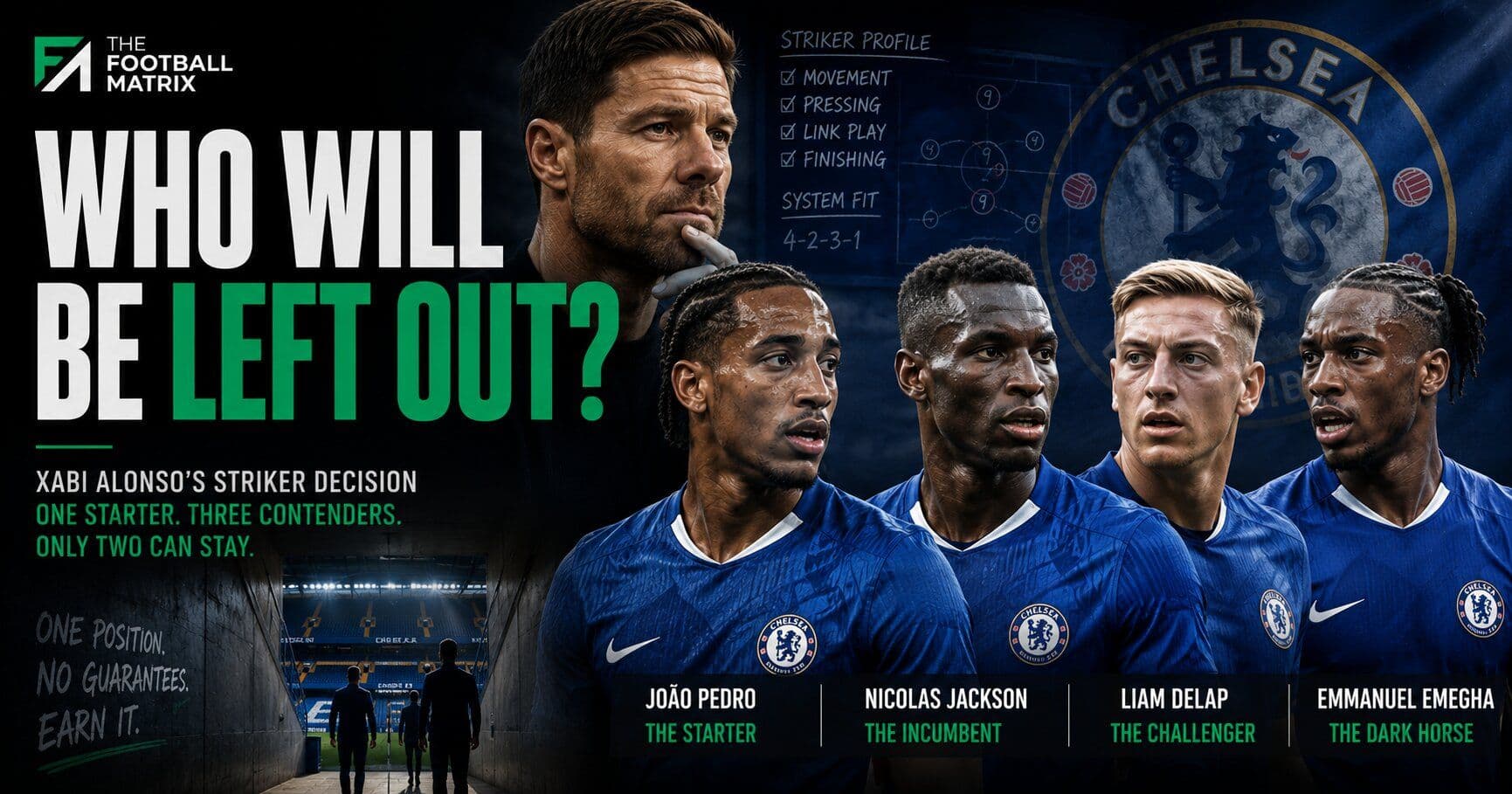
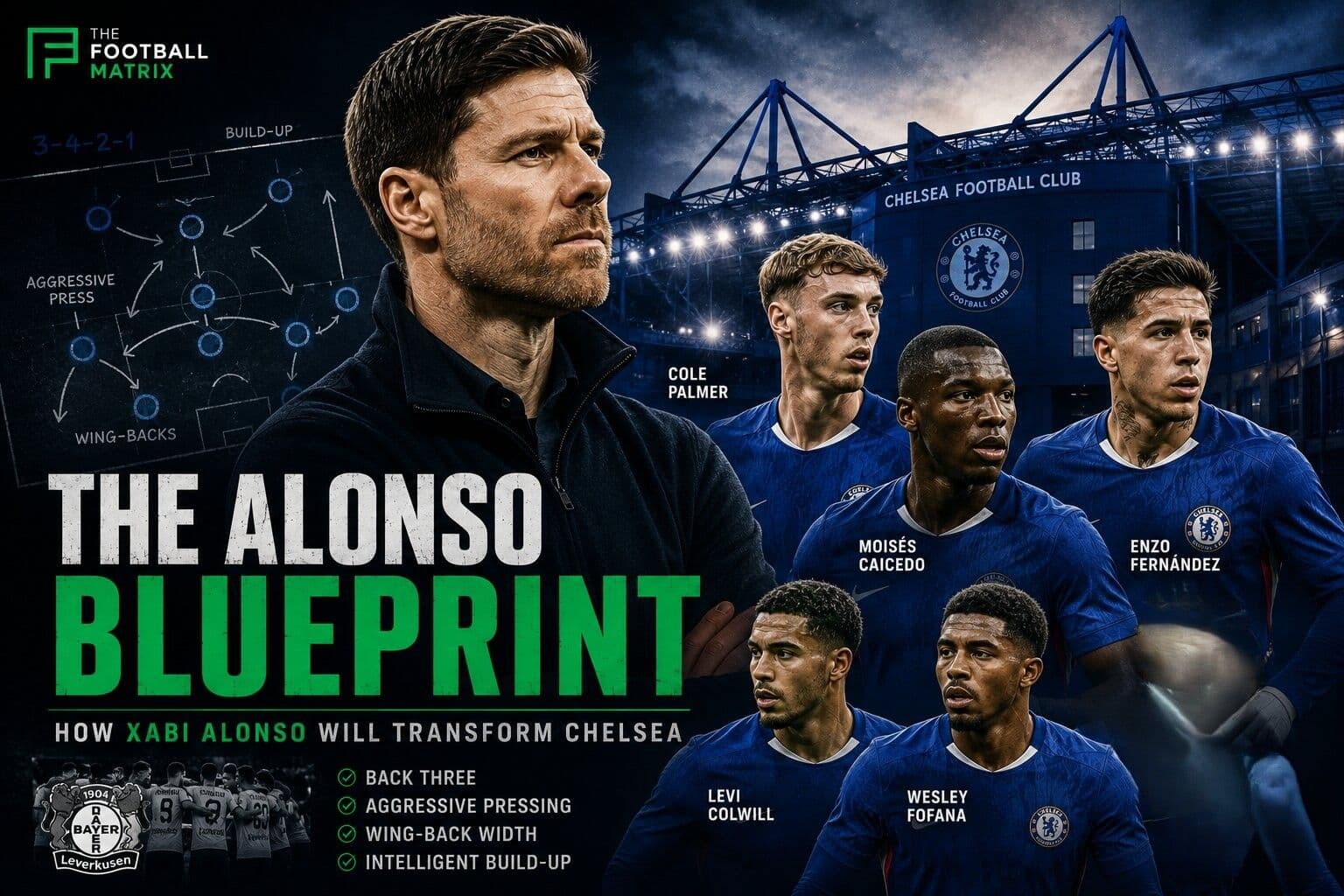
Xabi Alonso's tactical model demands something different. The positional principles that underpinned Bayer Leverkusen's unbeaten domestic campaign rely on coordinated movement, structured pressing and intelligent occupation of central spaces rather than prolonged individual duels. Width is largely provided by wing-backs, while the front line is expected to rotate, combine and contribute consistently without the ball.
Within that framework, Garnacho's profile becomes more difficult to accommodate. His return of one Premier League goal across 24 league appearances reinforces the broader tactical concern: despite his ability to beat defenders, his influence was not consistently translating into decisive attacking output within Chelsea's structure.
2. Financial Reality: Why Chelsea Want a Permanent Sale
Balancing PSR and Squad Planning
Chelsea's position in negotiations has been firm. Reports indicate that a season-long loan proposal from Roma, including an option to buy, was rejected as the club prioritises a permanent transfer.
The reasoning extends beyond football. Garnacho arrived from Manchester United for around £40 million less than a year ago, while United reportedly retain a 10% sell-on clause. Combined with the player's remaining book value, accepting a significantly reduced fee could create an unfavourable accounting outcome under the Premier League's Profit and Sustainability Rules.
A loan would postpone that financial resolution rather than provide the immediate certainty Chelsea are seeking. From the club's perspective, a permanent sale better aligns with both squad planning and financial management.
The Wider Rebuild
Garnacho's potential departure also fits into Chelsea's broader transfer strategy under Alonso. The club has already generated significant funds through outgoing deals, including Andrey Santos' reported £50 million move to Manchester United, as it reshapes the squad around players better suited to the new tactical model.
3. The World Cup Setback
A Career at a Crossroads
There is also a personal dimension to the situation.
Missing out on Argentina's World Cup squad after a disappointing domestic campaign appears to have sharpened Garnacho's priorities. Regular first-team football is no longer simply desirable—it has become increasingly important if he is to re-establish himself internationally.
At 22, with a long-term contract still in place and obvious technical ability, spending another season as a rotational option may not represent the best path forward for either player or club. That shared recognition helps explain why both parties appear open to finding a solution rather than forcing an uncomfortable compromise.
4. Funding the Next Phase
Rogers, Yildiz and Kroupi Fit the New Vision
Chelsea's interest in Morgan Rogers, Kenan Yildiz and Junior Kroupi illustrates the type of attacker Alonso appears to favour.
While each offers different qualities, all are comfortable operating across multiple attacking positions, contributing aggressively without possession and combining centrally rather than relying exclusively on isolated dribbles. Those characteristics align more naturally with Alonso's positional framework than Garnacho's traditional wide-wing profile.
A sale approaching Chelsea's reported £50 million valuation would significantly strengthen the club's ability to pursue those targets.
There are, however, obvious obstacles. Several European clubs have reportedly been reluctant to match Chelsea's asking price given Garnacho's recent production, while interest from the Saudi Pro League appears more capable of meeting the financial demands. Whether Garnacho is willing to leave Europe's top leagues at this stage of his career remains uncertain.
The Case for Patience
Chelsea's position is understandable, but selling a talented 22-year-old after only one season also carries risk.
Players with Garnacho's pace, directness and attacking instincts often flourish in systems built around transition rather than positional control. If he joins a club better suited to his strengths and rediscovers the form that prompted Chelsea's investment, this decision may eventually be viewed differently.
Negotiations could also become protracted. Chelsea's reported £50 million valuation remains ambitious for a player who scored once in the Premier League last season, and interested clubs know the London side are attempting to finance further recruitment. That dynamic may encourage buyers to wait deeper into the transfer window before making their strongest offers.
The Bottom Line
This is less a story of an expensive signing failing than one of tactical incompatibility arriving sooner than expected.
Alonso's system places collective structure above individual improvisation, and Garnacho's strengths appear better suited to a different tactical environment. Add Chelsea's financial considerations and the winger's desire for consistent football following his World Cup disappointment, and the incentives increasingly point in the same direction.
The transfer window still leaves room for negotiations to evolve, but Chelsea's willingness to keep Garnacho away from pre-season training suggests both club and player already recognise the likely outcome. The remaining question is not whether he leaves—it is which club ultimately provides the next chapter of his career.
Support The Football Matrix on Google Search
Add us as a preferred source to highlight our transfer & injury intelligence in your search results.
☕ Keep The Matrix Running
The Football Matrix is independent — no ads, no paywalls, no corporate sponsors. If our coverage adds value to your matchday, consider buying us a coffee. It goes directly toward hosting, infrastructure, and keeping the editorial free for everyone.
Discussion (0)
Loading comments...