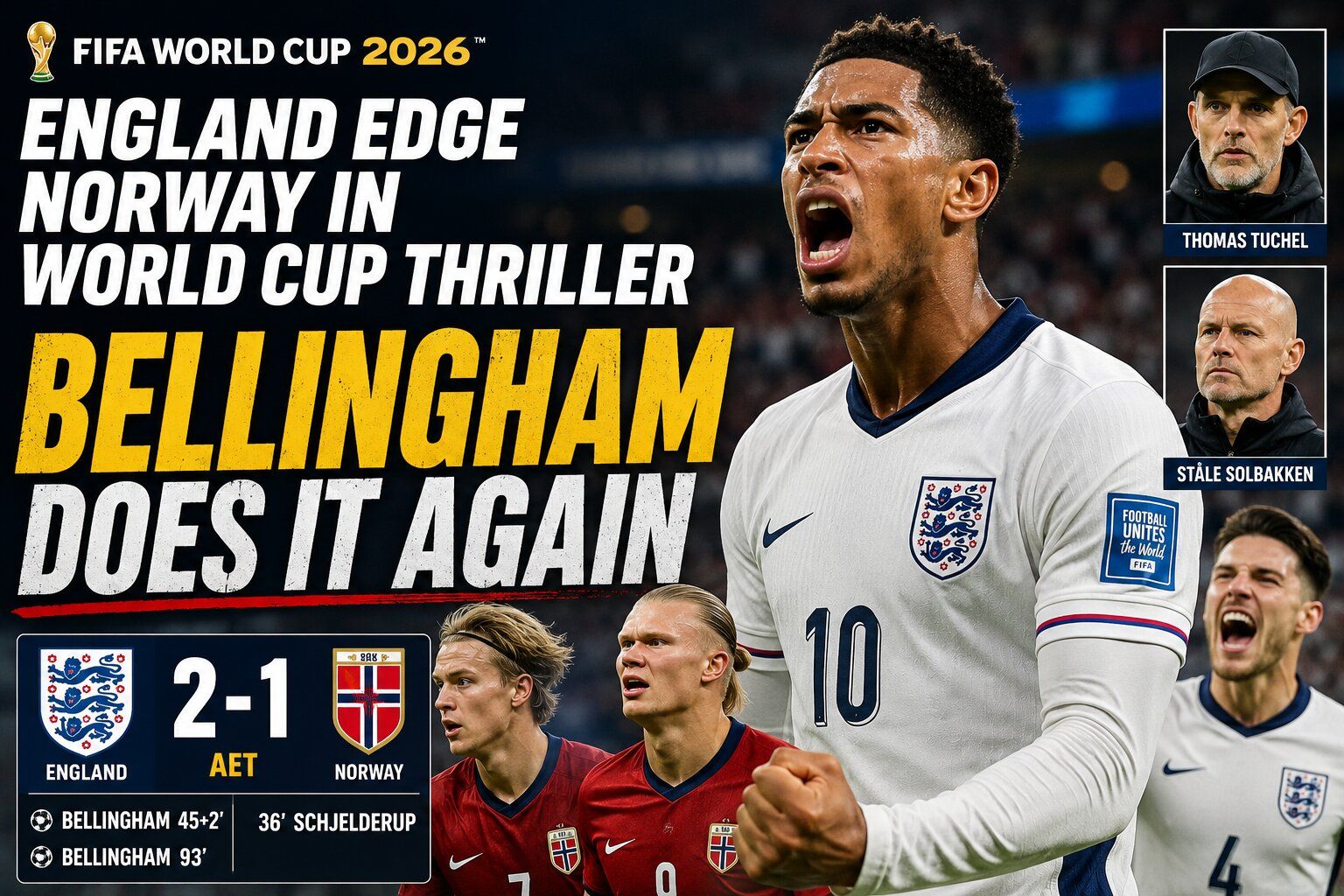
England are through to the World Cup semi-finals, but only after surviving their sternest examination of the tournament. Norway matched Thomas Tuchel's side for long spells in Miami, carrying a genuine threat through Erling Haaland and Martin Ødegaard before Jude Bellingham's extra-time winner finally settled an absorbing contest. The Real Madrid midfielder scored twice to overturn Andreas Schjelderup's first-half opener, ending Norway's remarkable run while keeping England's World Cup dream alive.
Norway Strike First: Schjelderup Rewards an Aggressive Start
Norway's opener in the 36th minute was thoroughly deserved. Andreas Schjelderup drifted inside from the left before bending a superb finish in off the underside of the post beyond Jordan Pickford, capping an impressive opening period in which Ståle Solbakken's side consistently disrupted England's rhythm.
Rather than allowing England to progress through midfield, Norway compressed the central spaces around Declan Rice and Jude Bellingham, forcing possession into wider areas where England struggled to create meaningful penetration. Martin Ødegaard orchestrated the press intelligently, while Norway's midfield repeatedly prevented England from establishing the vertical combinations that had characterised their earlier knockout performances.
England's midfield balance was also affected by Rice's fitness. Having entered the match following illness in the build-up, he appeared short of his usual mobility, forcing Elliot Anderson to drop deeper in support and creating the pockets of space Schjelderup exploited for the opening goal.
Bellingham Responds Before the Break
England's response arrived at a crucial moment.
Deep into first-half stoppage time, Bellingham collected the ball inside the penalty area and finished calmly beyond Ørjan Nyland to restore parity. The goal was briefly overshadowed by an unusual incident during the build-up, with Norway protesting that the ball had made contact with the suspended aerial camera cable following a goal kick.
After a lengthy VAR review, officials ruled that the contact had not materially altered the ball's flight, allowing the goal to stand. While the decision frustrated the Norwegian bench, play resumed with England level and the momentum beginning to shift.
VAR Denies Norway a Second Lead
Norway believed they had regained the advantage shortly after the restart when Torbjørn Heggem converted from close range following a scramble inside the penalty area.
Another extended VAR review, however, identified a foul by Erling Haaland on Elliot Anderson earlier in the attacking phase, resulting in the goal being overturned.
Although both major VAR decisions were supported under the Laws of the Game, they compounded Norway's sense of frustration in a match where margins repeatedly went against them.
Tuchel's Tactical Adjustment Changes the Contest
Tuchel's most influential contribution came midway through the second half.
The introductions of Bukayo Saka and Reece James altered England's defensive structure, allowing the team to operate with greater security against Norway's transitions. England increasingly defended with an additional layer of protection around Haaland, while Ezri Konsa and John Stones denied the Norwegian striker the direct service he had enjoyed before the interval.
The tactical adjustment gradually reduced Norway's attacking threat. Haaland remained a constant physical presence, but England succeeded in limiting both the quality and frequency of the chances created through him as the match moved into extra time.
Bellingham Delivers Again
The decisive moment arrived three minutes into extra time.
Morgan Rogers' speculative effort was spilled by Nyland, and Bellingham reacted quickest inside the six-yard box to drive the rebound into the roof of the net. It was the instinctive finish of a midfielder who had once again produced when England needed him most.
With the lead secured, Tuchel shifted his focus entirely to game management. Dan Burn was introduced to reinforce the defence, while Norway searched unsuccessfully for one final opportunity to force penalties. Haaland was withdrawn before the second period of extra time as Solbakken attempted to inject fresh energy into his attack, but England's reshaped back line held firm.
By the Numbers
| Metric (120 Minutes) | England | Norway |
|---|---|---|
| Goals | 2 | 1 |
| Total Shots | 16 | 5 |
| Shots on Target | 6 | 1 |
| Possession | 54% | 46% |
| Yellow Cards | 0 | 1 |
England's statistical advantage reflected how the game evolved after the interval. While Norway controlled significant periods of the first half, England gradually established greater territorial control and created the larger volume of chances over 120 minutes.
Looking Ahead
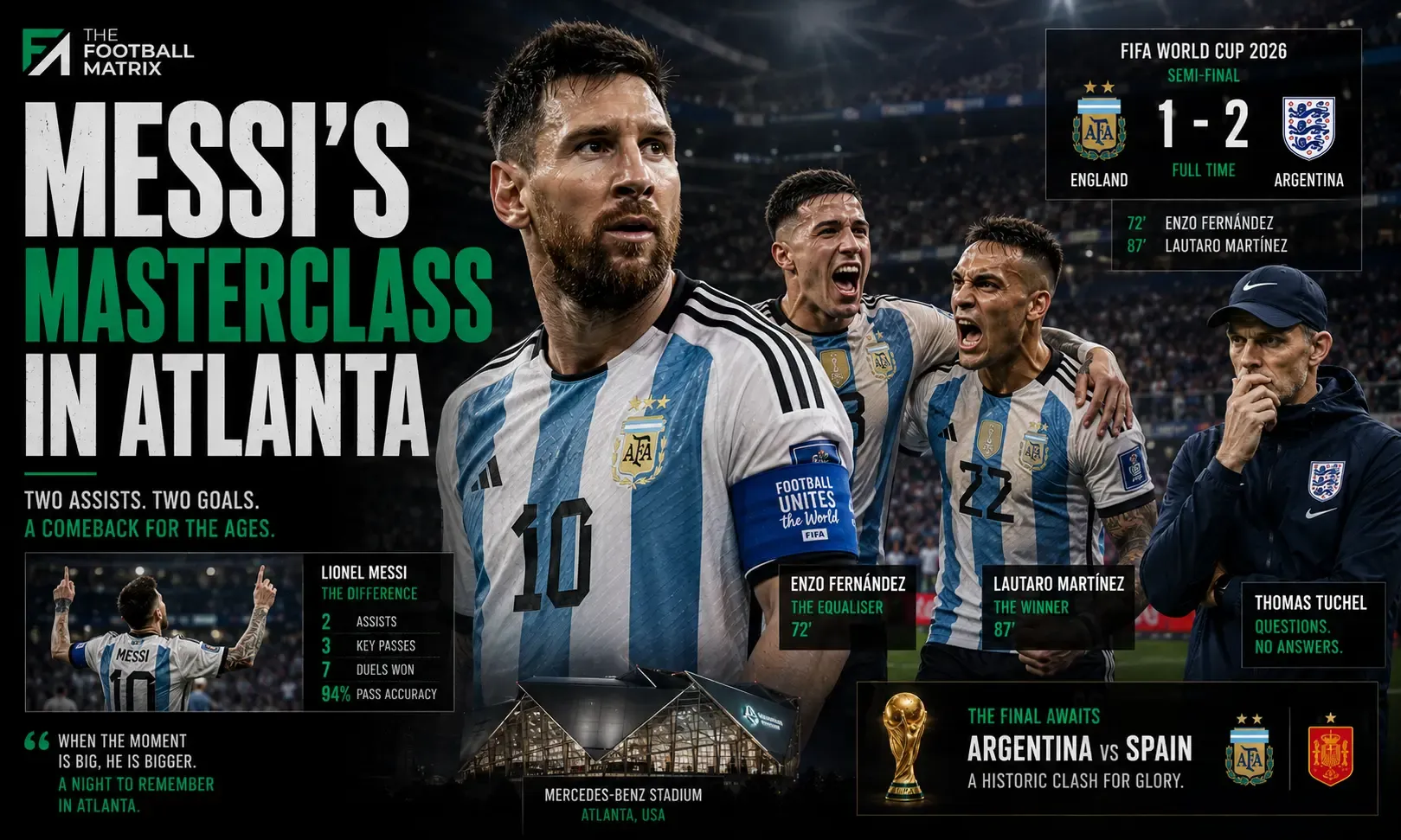
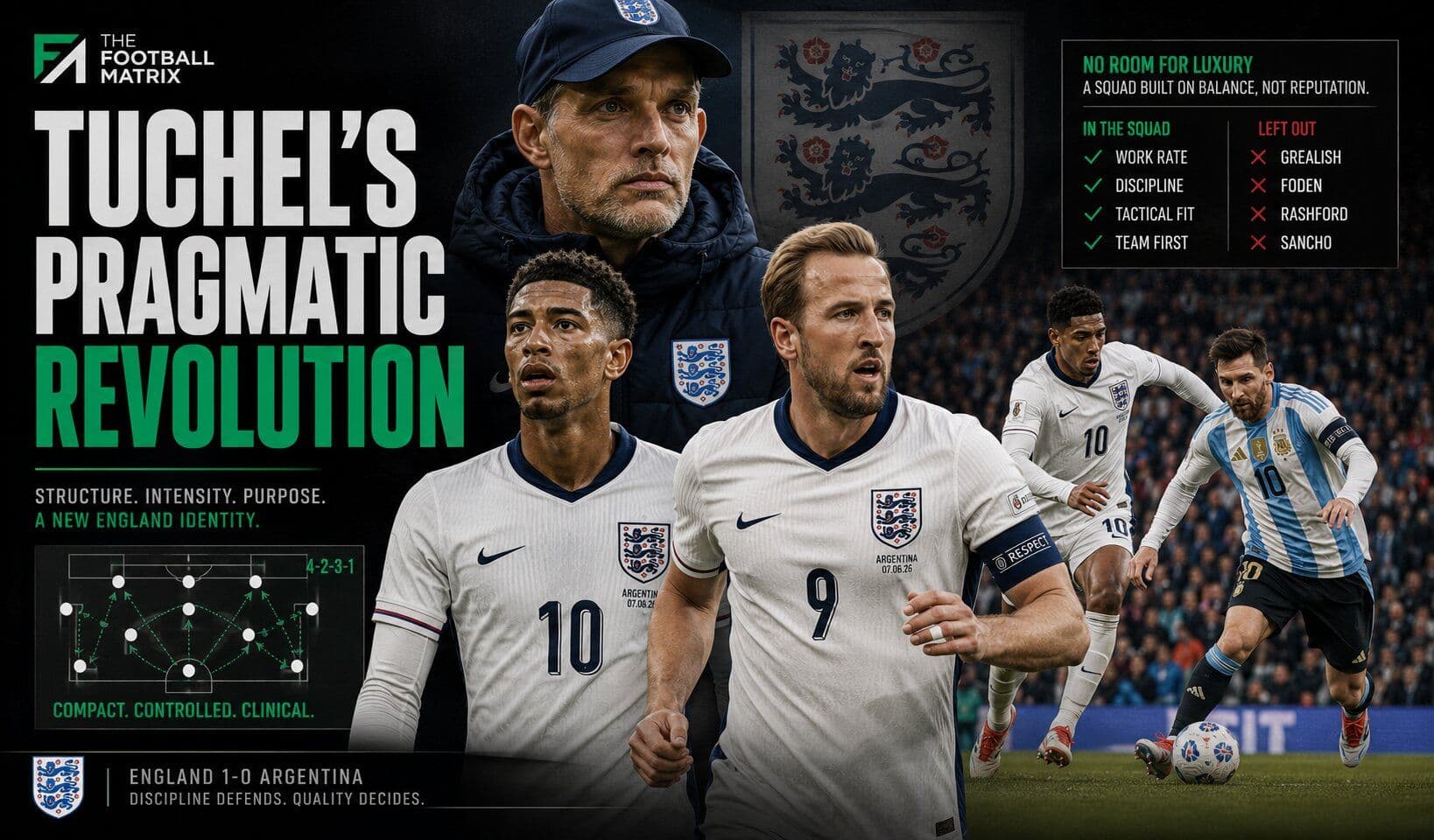
England now travel to Atlanta for a World Cup semi-final against Argentina, having survived their most demanding knockout test to date.
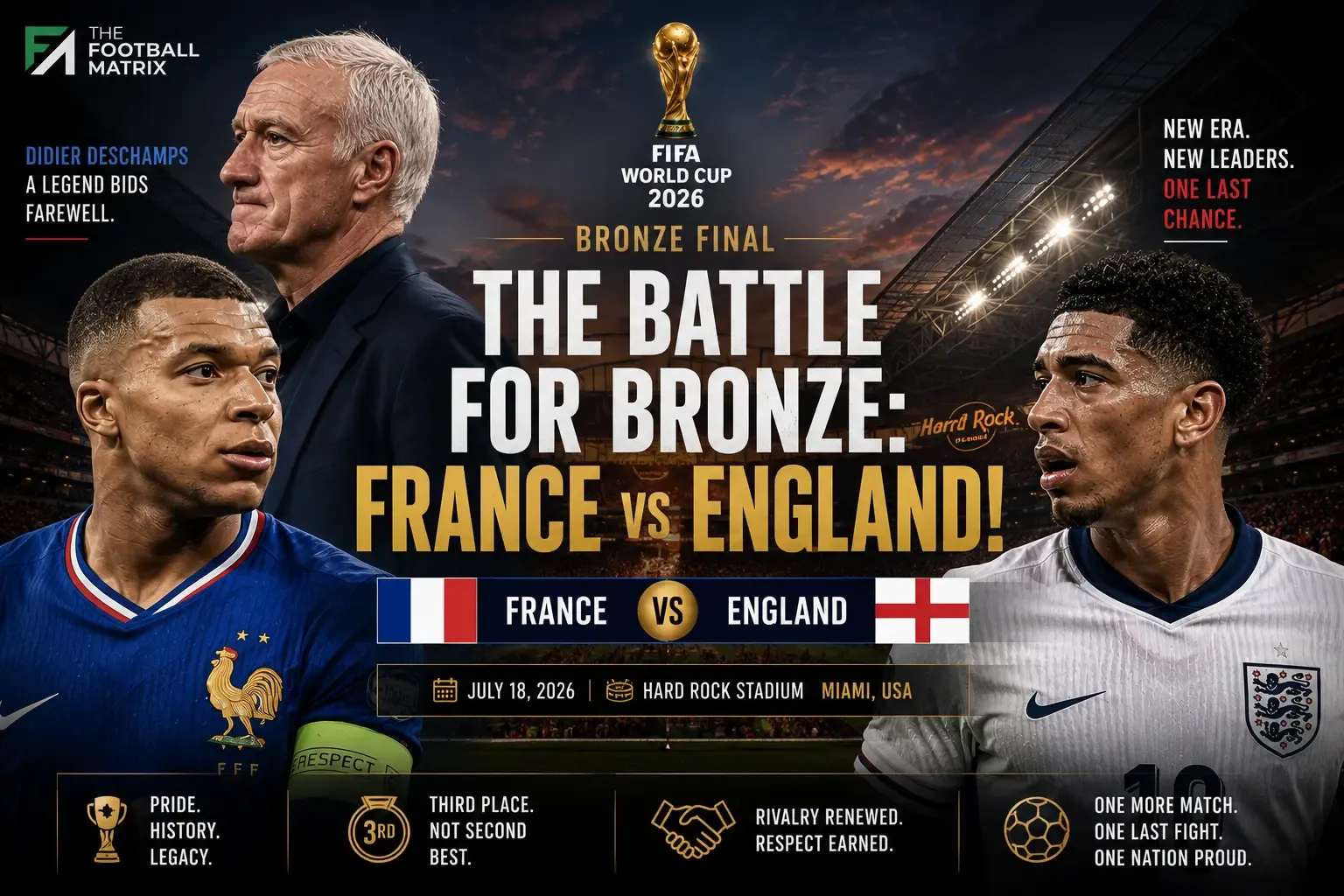
Elsewhere in the bracket, France's comfortable victory over Morocco gives Didier Deschamps' side the advantage of additional recovery time before their semi-final against Spain, an increasingly significant factor at this stage of the tournament.
Individually, Bellingham's two-goal performance also keeps him firmly in the Golden Boot conversation. While Kylian Mbappé continues to lead the scoring charts, England's midfielder has emerged as one of the defining performers of the knockout rounds.
Norway leave the tournament with genuine disappointment but considerable credit. Their disciplined structure, fearless approach and ability to push one of the favourites into extra time marked them as one of the competition's biggest success stories. England, meanwhile, continue their pursuit of the trophy, carried once again by a player who seems determined to shape the biggest occasions himself.
Support The Football Matrix on Google Search
Add us as a preferred source to highlight our transfer & injury intelligence in your search results.
☕ Keep The Matrix Running
The Football Matrix is independent — no ads, no paywalls, no corporate sponsors. If our coverage adds value to your matchday, consider buying us a coffee. It goes directly toward hosting, infrastructure, and keeping the editorial free for everyone.
Discussion (0)
Loading comments...