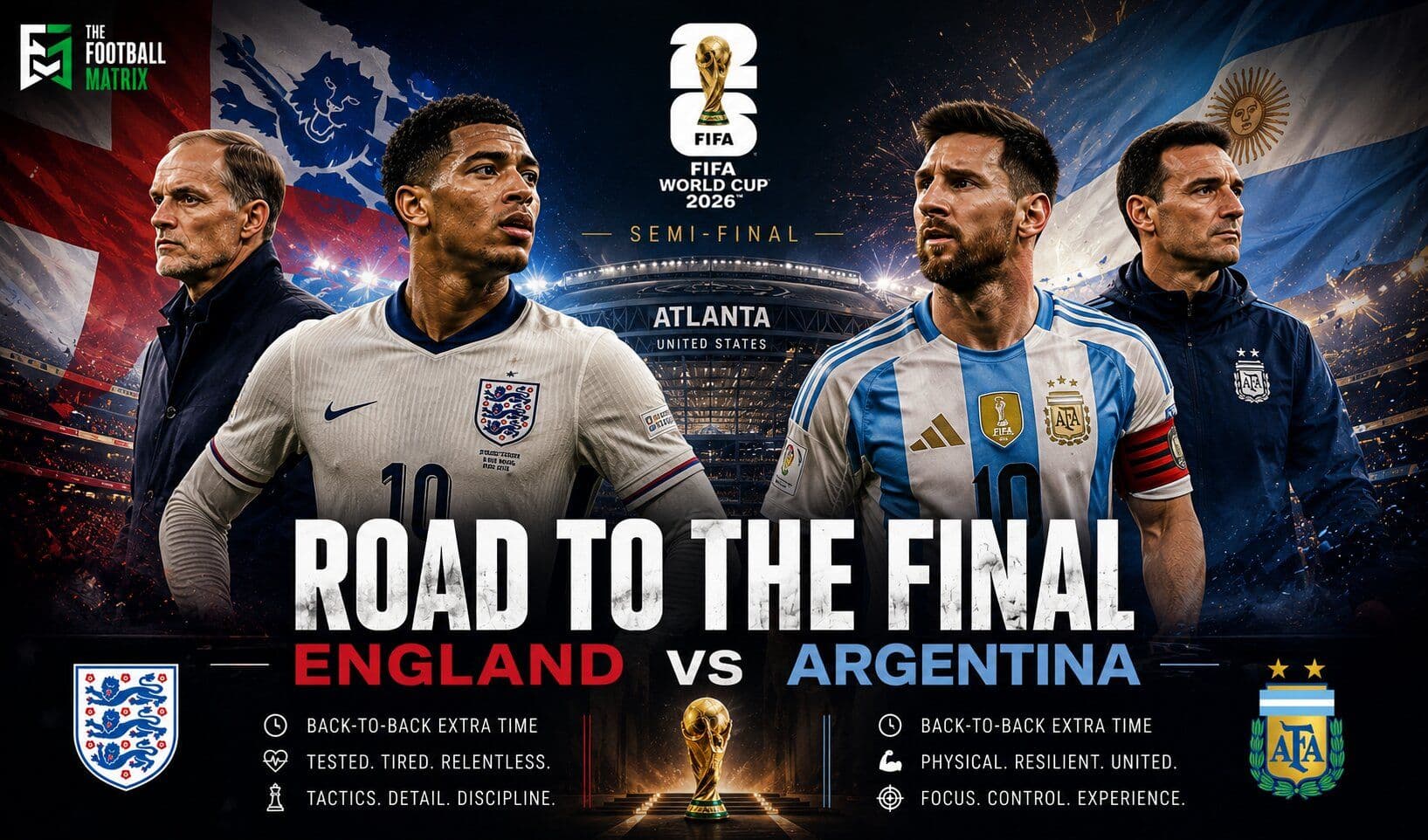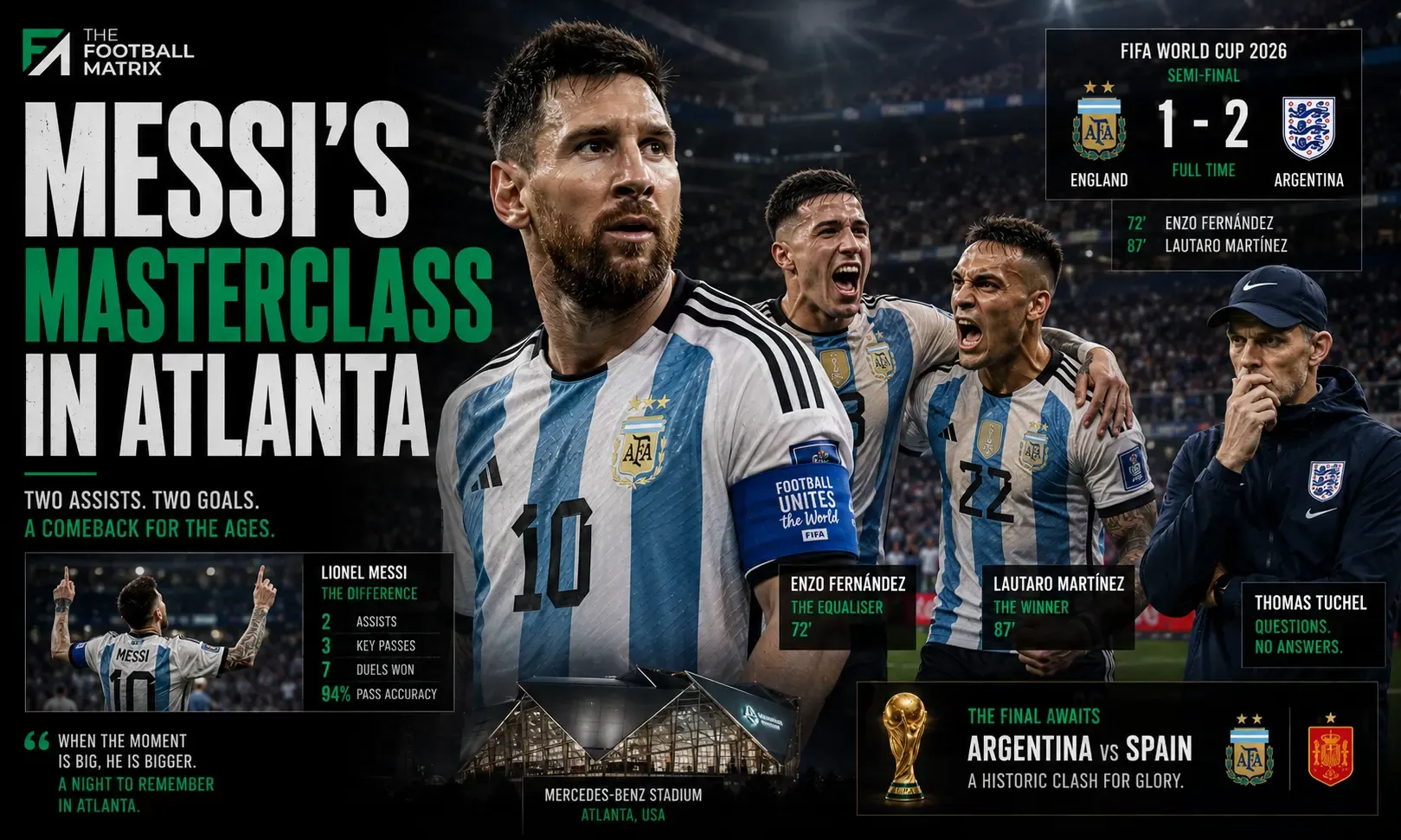
For 84 minutes inside Mercedes-Benz Stadium, Thomas Tuchel had the answer. Then Lionel Messi found the question nobody could solve.
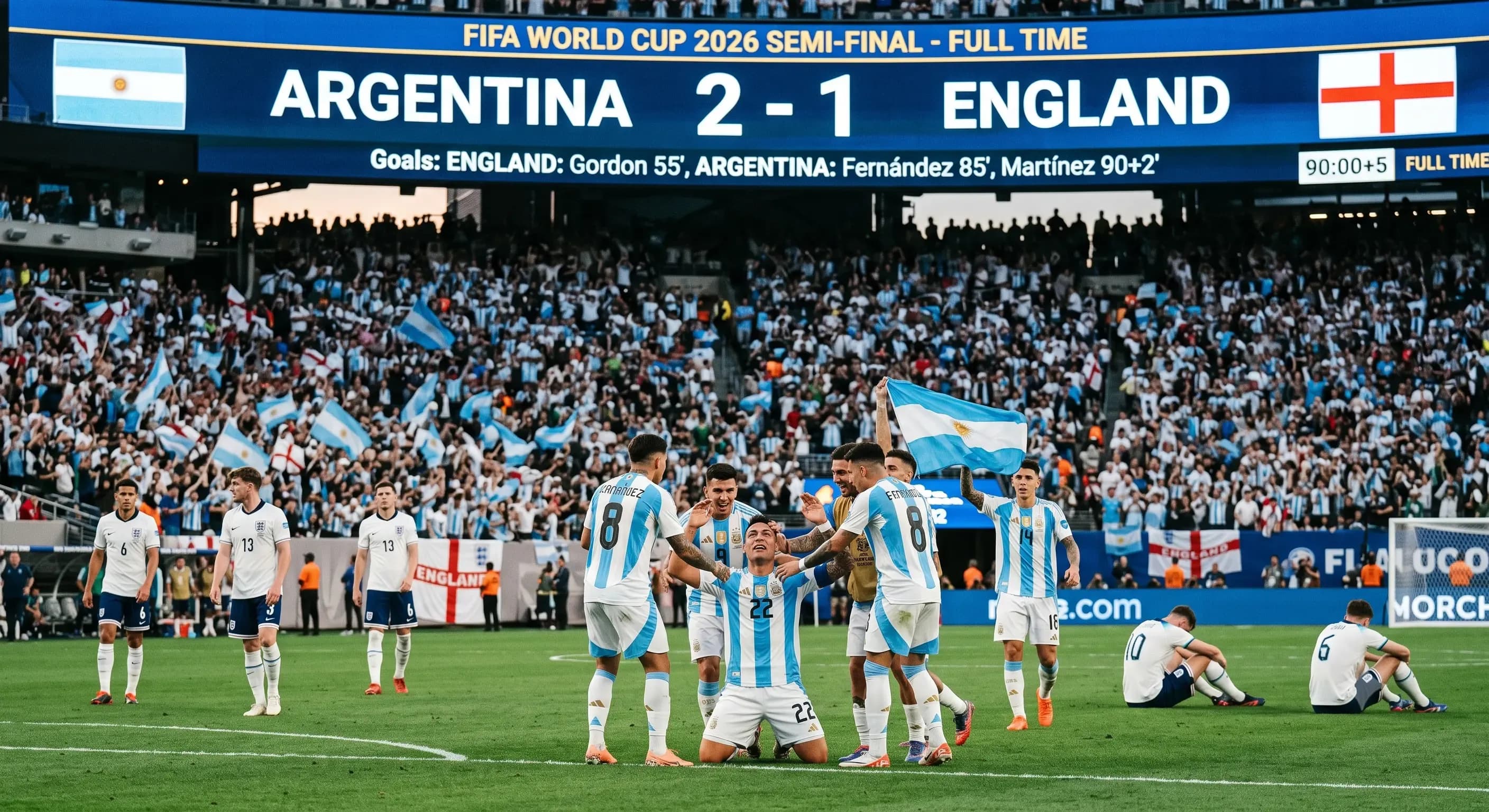
Argentina's 2-1 semi-final win over England on Wednesday night will be remembered for its dramatic final moments, rather than the preceding tense two hours. Anthony Gordon's 55th-minute strike had England on the brink of their first World Cup final since 1966, and for nearly half an hour, they defended that lead with a discipline that bordered on suffocating. However, in the space of just seven minutes, it all fell apart. Enzo Fernández drilled in an equaliser from 25 yards in the 85th minute, and Lautaro Martínez headed home the winner in stoppage time. Both goals traced back to the same source: a 39-year-old playing his first-ever match against England, drifting into space that Tuchel's own substitutions had created for him.
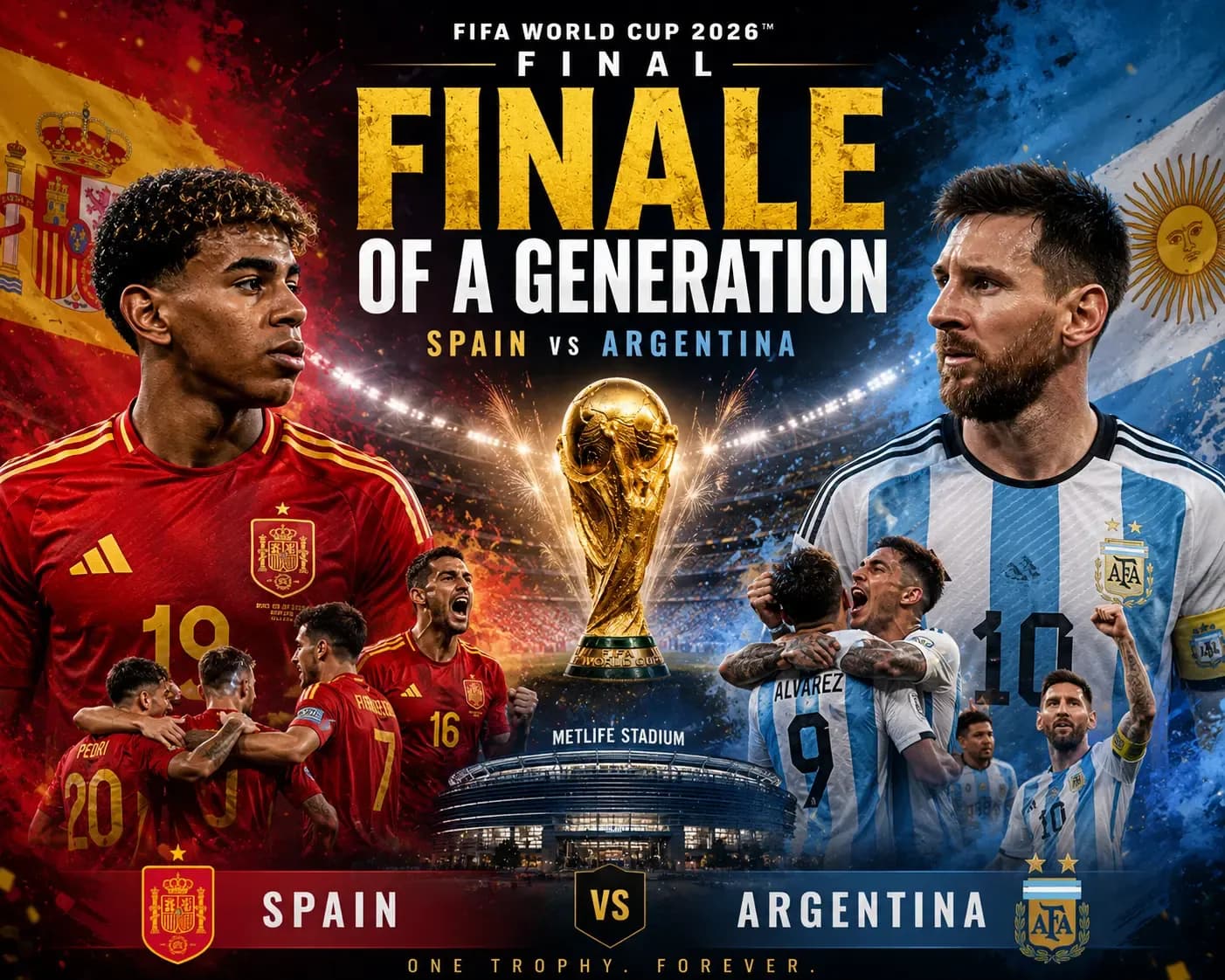
Argentina now travel to MetLife Stadium to face Spain in Sunday's final. England will return home to prepare for a third-place playoff against France and to a domestic inquest into how a team that limited Messi to almost nothing for an hour ultimately succumbed to him.
The Seven-Minute Capitulation: How Thomas Tuchel Parked the Wrong Bus
Tuchel's game plan wasn't reckless; it was, for long stretches, effective. England pressed intelligently in the first half, absorbed Argentina's early spells of possession, and struck through Gordon — set up by Morgan Rogers — with a goal built on genuine tactical control rather than luck. Until the 72nd minute, Messi had barely touched the ball in a dangerous area.
What followed was an attempt to replicate a strategy that had already worked once at this tournament. Tuchel's men had successfully held out with ten players against Mexico in the Round of 16 by retreating into a compact low block. The instinct to do it again — a goal up, against Argentina, in a World Cup semi-final — was understandable. The problem was timing. Sealing a game shut with 30 minutes still on the clock against a side featuring Messi, Fernández, and Martínez is a considerably different proposition to protecting a slender lead in the final ten.
The 72nd-Minute Retreat: Stripping the Outlet
The first alteration came almost immediately after the goal. Gordon, England's scorer and their most direct outlet in transition, was withdrawn for centre-back Ezri Konsa, shifting the formation to a 5-3-2. This switch was designed to keep bodies behind the ball, but it also removed England's only realistic means of relieving pressure. Without a runner to stretch the pitch on the counter, every clearance simply invited Argentina straight back.
The numbers from that period tell their own story. England's overall possession finished at 64% for the match — a figure that, taken alone, would suggest a team comfortably in charge. However, between Gordon's goal and Martínez's winner, England had the ball for just 12% of the time. That is not a team managing a lead; it is a team under siege.
Leaving the Edge Unprotected: The Cost of Subbing Declan Rice
The second wave of changes in the 82nd minute compounded the problem. Reece James made way for Dan Burn, adding height and defensive solidity out wide, while Declan Rice — arguably England's most important player in shielding the back line throughout the tournament — was replaced by Nico O'Reilly, a midfielder brought on with defensive intent rather than to patrol the space in front of the box.
That space mattered. With Rice off the pitch, nobody was screening the 25-yard channel that Fernández exploited three minutes later. Messi, entirely freed from tracking back due to England's decision to sit deep and narrow, drifted into the right half-space that a five-man defence naturally leaves open between its wide centre-back and the edge of the area. He found Fernández with a simple, unhurried pass. What Fernández did with it — a first-time strike that left Jordan Pickford with no chance — was the individual brilliance that turned a defensible position into a crisis. Had that moment not occurred, Tuchel's substitutions might well have been remembered as the changes that saw England over the line.
By the time Argentina scored their winner, England's back five had been defending crosses and corners for the better part of twenty minutes without respite. Argentina's full-backs pushed high, their bench emptied of attacking reinforcements, and the toll showed. Messi found the flank unmarked, delivered a cross of the type he has produced throughout his career, and Martínez did the rest — exploiting a lapse in concentration from defenders who had been under siege since the 72nd minute.
The Ageless Maestro: Messi's First and Finest Dance with the Three Lions
It is almost improbable that Messi, across two decades at the top of the sport, had never faced England before Wednesday. That he chose this stage — a World Cup semi-final, at 39, with Argentina staring at elimination — to do it for the first time only adds to a career built on producing his best work when the moment demands it most.
Messi didn't score; he didn't need to. His value on the night was as a creator, and the numbers back up what the eye saw: two assists that took his career World Cup tally to 12, the most by any player in tournament history since Opta's detailed records began in 1966. Ten of those twelve have come in knockout football — hardly a coincidence for a player whose reputation was, for years, unfairly built around the absence of a World Cup rather than his conduct within one.
The Playmaker Over the Scorer: Breaking the Tie with Mbappé
Wednesday's performance also settled, for now, the argument over who leads this tournament's Golden Boot race. Messi and Kylian Mbappé had been level on eight goals heading into the semi-finals, but Messi's second assist of the night pushed his goal involvements to 12 against Mbappé's 11.
| Player | Goals | Assists | Goal Involvements | Matches Played |
|---|---|---|---|---|
| Lionel Messi (ARG) | 8 | 4 | 12 | 7 |
| Kylian Mbappé (FRA) | 8 | 3 | 11 | 6 |
| Erling Haaland (NOR) | 7 | 1 | 8 | 5 |
| Jude Bellingham (ENG) | 6 | — | 6 | 7 |
| Harry Kane (ENG) | 6 | — | 6 | 7 |
(Data source: FIFA Official Tournament Stats)
It's a subtle but revealing shift in Messi's game at this stage of his career. He extended his own record of scoring or assisting in 13 consecutive World Cup matches without needing to be the one who finished the move — a reflection of a player who has adapted his role as his legs have slowed, without any corresponding drop in his influence. For anyone curious about where the eventual award could land if the totals remain level, how World Cup Golden Boot tiebreakers work is worth understanding before Sunday.
Historical Symmetry: From Maradona in '86 to Messi in '26
Argentina and England have never needed extra reasons to dislike each other on a football pitch, and this fixture always carries weight beyond the result. Forty years on from Diego Maradona's defining tournament in Mexico, it was Messi — the player who has spent a career being measured against that ghost — producing the moment of individual quality that decided an Argentina-England World Cup tie.
Elbows, Egos, and Slogans: The Grudge Match Reborn
None of this needed the added heat of on-pitch confrontation or post-match controversy, but Atlanta delivered both.
Three Minutes in Atlanta: Bellingham and the Argentine Aggression
Jude Bellingham and Enzo Fernández clashed within the opening three minutes, setting a tone that never really softened. Argentina's approach throughout was combative — some English commentators labelled it "anti-football" — and it is fair to say a stricter referee could easily have reached for a second yellow card against players like Leandro Paredes or Fernández at various points. That Argentina avoided a numerical disadvantage owes something to fortune as much as discipline.
The Political Fallout: The "Las Malvinas" Banner and Looming FIFA Sanctions
The full-time whistle didn't end the tension. Giovani Lo Celso and Lisandro Martínez unfurled a fan-provided banner reading "Las Malvinas son Argentinas" — "The Falkland Islands are Argentinian" — a direct and unmistakably political statement that breaches FIFA's Stadium Code of Conduct, which explicitly prohibits political messaging inside its venues.
A disciplinary investigation into the Argentine Football Association and the two players involved looks certain, with fines the most probable outcome given precedents for similar incidents. Whether either player faces an individual ban for Sunday's final remains unresolved, and FIFA's disciplinary committee has given no indication of a timeline. Most observers consider suspensions unlikely at this stage, but it isn't yet a closed question — and it adds an unwelcome subplot to what should be a celebration of Argentina reaching back-to-back finals.
"They pressed for 60 minutes and then just ran out of steam. They got their goal and then sat back. That gave us more composure to move the ball around and stretch the pitch." — Lautaro Martínez, Argentina Striker
The Ultimate Showdown: Euro Champions vs. Copa Kings
Sunday's final at MetLife Stadium carries a distinction that no previous World Cup final has held: the reigning UEFA European champions against the reigning CONMEBOL Copa América champions. Spain arrive having beaten France 2-0 in the other semi-final — a performance built on the kind of control and patience that made Spain's tactical masterclass against France one of the tournament's defining displays. Argentina arrive having needed a rescue act.
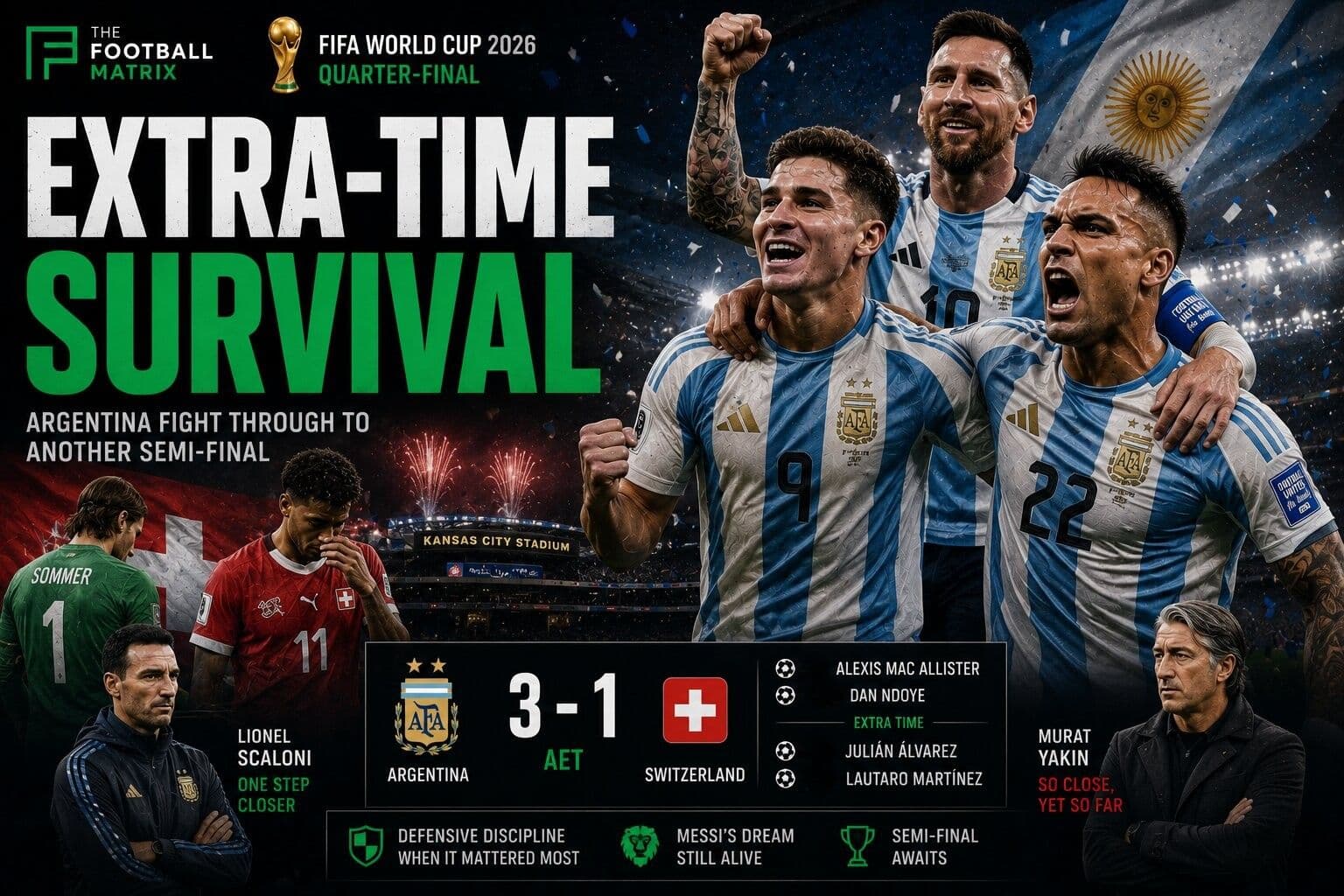
Whether that difference in route matters by Sunday evening is another question. Messi stands one result away from a second World Cup and a first Golden Boot to sit alongside it — achievements that would have seemed implausible for a 39-year-old at the start of the tournament and now look entirely within reach. Spain represent the most rounded team left in the competition, organized, patient, and difficult to break down in ways England, for an hour at least, briefly managed to be. Argentina have shown, twice now in this tournament, that whatever the game state, whatever the deficit, they have a route back to it — provided the man responsible still has something left in his legs come Sunday night.
Support The Football Matrix on Google Search
Add us as a preferred source to highlight our transfer & injury intelligence in your search results.
☕ Keep The Matrix Running
The Football Matrix is independent — no ads, no paywalls, no corporate sponsors. If our coverage adds value to your matchday, consider buying us a coffee. It goes directly toward hosting, infrastructure, and keeping the editorial free for everyone.
Discussion (0)
Loading comments...