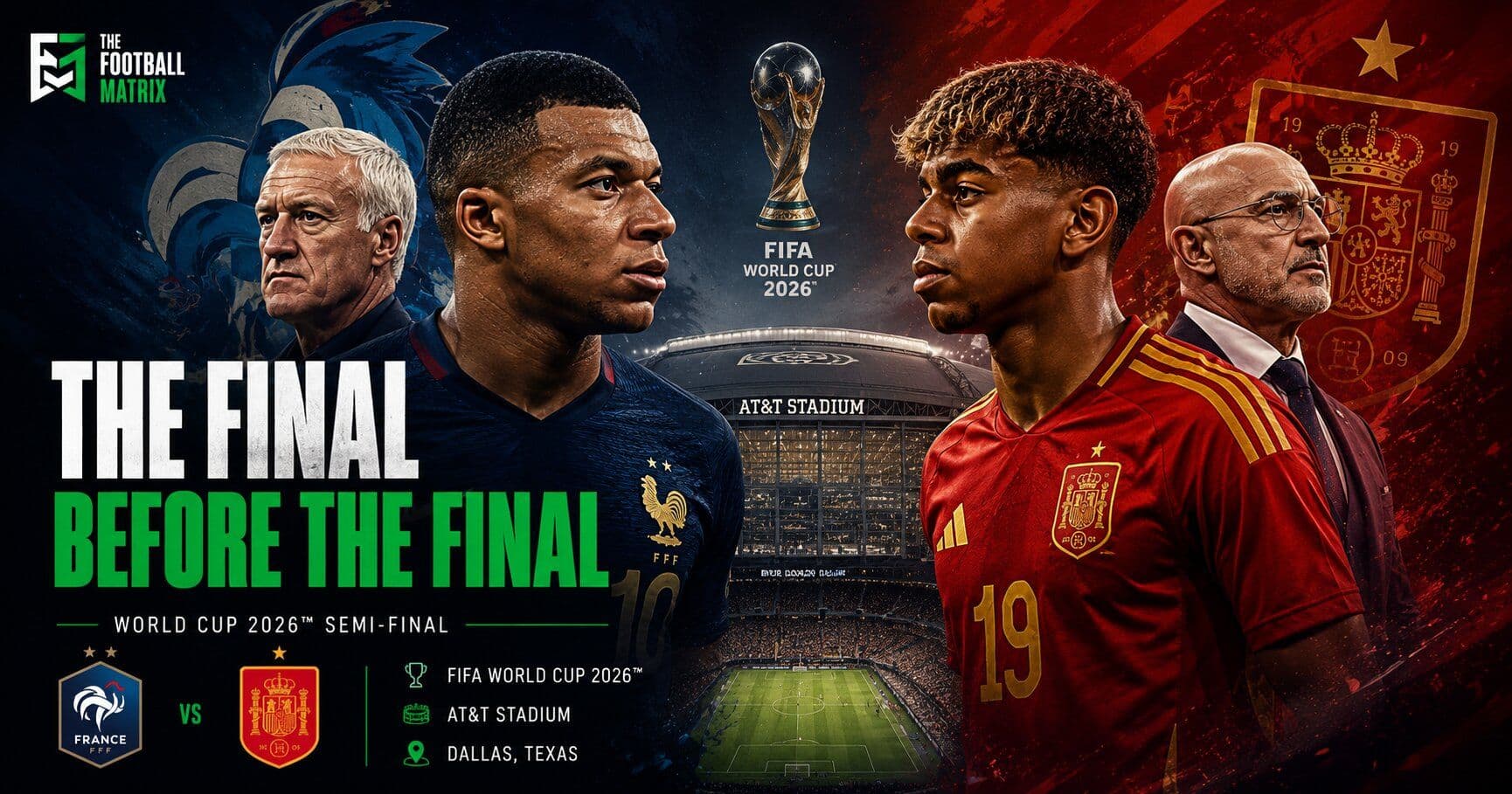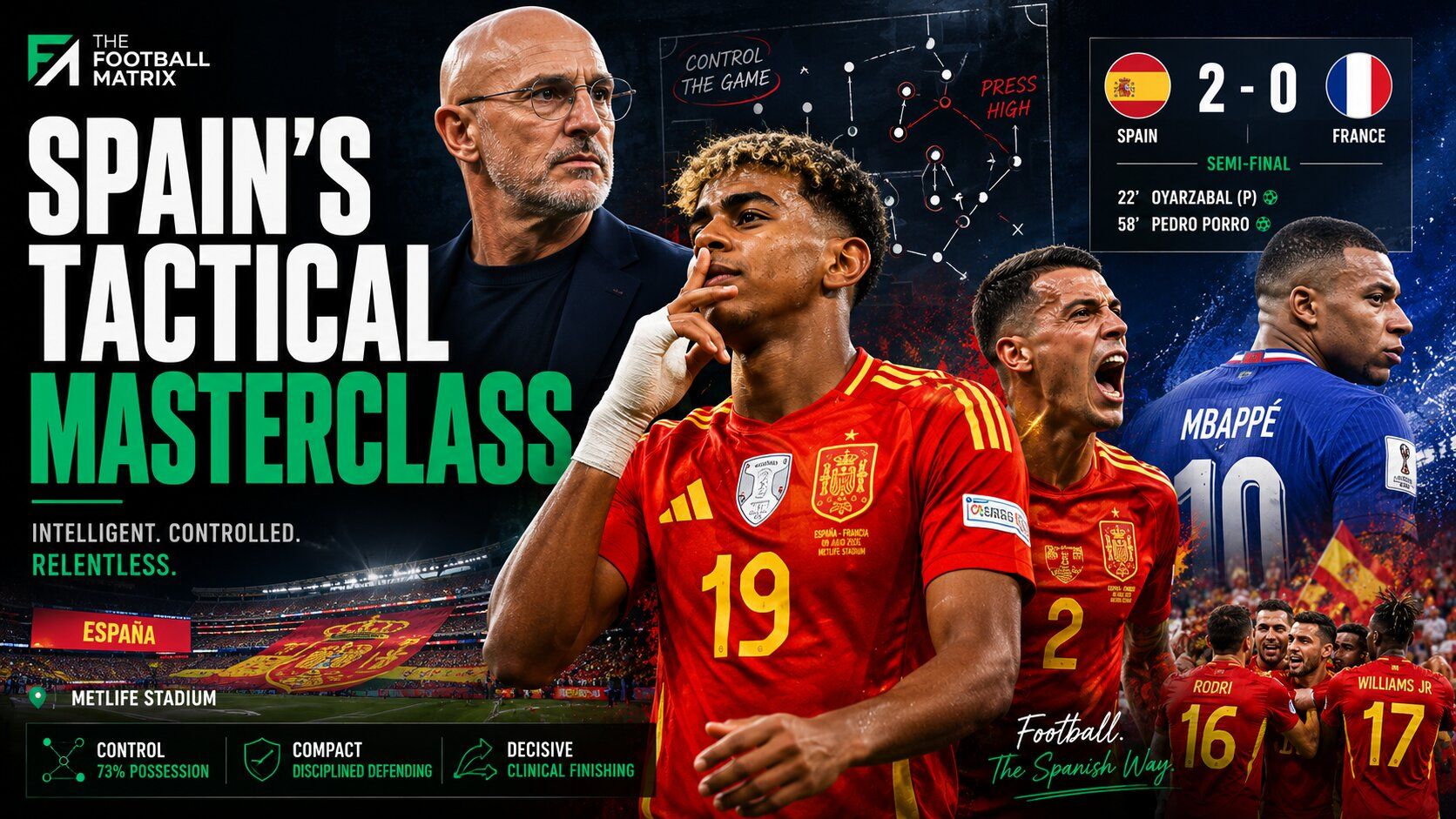
Didier Deschamps walked into AT&T Stadium as the manager of the tournament favourites. He walked out having just coached his final match for France. In between, his team was outplayed from the first whistle to the last by a Spain side that has redefined what international dominance looks like.
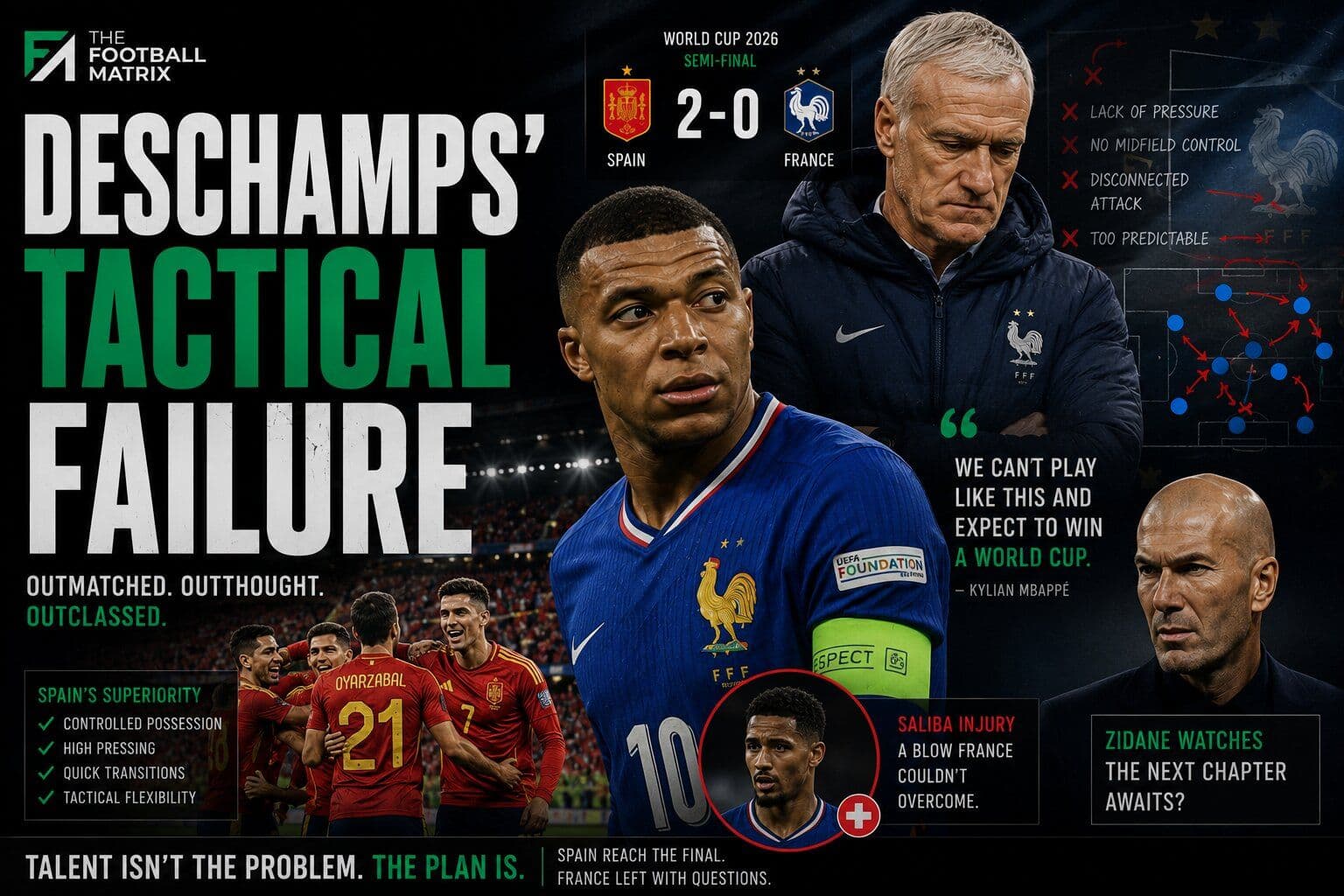
The 2-0 semi-final win, sealed on Bastille Day, sends Luis de la Fuente's team to the 2026 World Cup Final at MetLife Stadium on July 19. This victory extends Spain's unbeaten run to 37 matches, matching Italy's all-time record, and marks the end of Deschamps' 14-year reign as manager of Les Bleus—not with a whimper, but with a performance that exposed how far the international game has moved on without him.
Mikel Oyarzabal's 22nd-minute penalty and Pedro Porro's clinical second-half strike provided the scoreline. However, the true narrative of this match was told in the spaces Spain closed off, the passing lanes they denied, and the way Kylian Mbappé—supposedly the man capable of deciding any match on his own—barely touched the ball in a dangerous position for over an hour.
Tormenting Les Bleus: Lamine Yamal and the Penalty that Broke the Deadlock
The 22nd-Minute Flashpoint
The opening goal arrived from a moment that will be analyzed in France for weeks. Lucas Digne, attempting to clear a bouncing cross near the edge of his own box, caught Lamine Yamal on the thigh. Referee Iván Barton pointed to the spot, and after a VAR review, the decision stood.
France's players surrounded the officials, and their frustration will resonate at home—this was contact that many defenders make a hundred times a season without punishment. However, Barton had been decisive throughout, and Digne's follow-through, however unintentional, was sufficient under the letter of the law. Fine margins, in a match this tight, were always going to matter.
Oyarzabal's Ice-Cold Execution
What Oyarzabal did next removed any ambiguity from the moment. His left-footed penalty went straight into the top corner, giving Mike Maignan no chance. This marked his fifth goal of the tournament and, more significantly, forced either Spain or France to trail for the first time in the entire competition—a small but telling detail given how untroubled both teams had looked before Dallas.
There was symbolism in who won the penalty. Yamal had turned 19 the day before. Whatever birthday plans he had, he marked the occasion by drawing the foul that put Spain ahead against the player and country most likely to have denied him a place in the final.
Tactical Dominance: How De la Fuente Suffocated the French Transition
The Rodri & Fabián Ruiz Pivot
The platform for the win was built in midfield, where Rodri and Fabián Ruiz operated as a disciplined double pivot rather than the free-flowing progressive pairing Spain sometimes employs. The instruction appeared straightforward: the moment possession changed hands, one of the two would step forward immediately, either closing the nearest passing lane or committing a calculated foul to stop France from breaking at pace.
This approach effectively cut off the supply to Michael Olise and Mbappé before it could even begin. Instead of receiving the ball facing Spain's defence with space to exploit, Mbappé was repeatedly forced to drop into his own half to collect possession—precisely the kind of position where his acceleration counts for little.
Porro's Inverted Geometry
Spain's second goal, scored in the 58th minute, was the clearest evidence of a game plan built on more than just containment. Yamal's presence on the right touchline consistently drew Digne wide, allowing Pedro Porro to exploit the resulting space by making underlapping runs into the half-spaces, rather than overlapping down the line in the traditional full-back sense.
Digne and Dayot Upamecano never quite settled on who should track Porro's movement, and Spain's second goal exploited this confusion perfectly. Porro fed Dani Olmo, who held the ball up and drew Upamecano out of position before rolling a reverse pass back into the space Porro had run into. The finish itself was routine, but getting there was the product of a rehearsed pattern, not improvisation.
Three minutes later, Yamal thought he had made it three with a goal of real quality, only for the flag to go up for offside. It didn’t change the outcome, but it summed up an afternoon in which Spain looked capable of scoring whenever they chose to press the issue.
The Numbers Behind the Statement
| Metric | Spain | France |
|---|---|---|
| Goals | 2 | 0 |
| Shots (On Target) | 11 (3) | 10 (2) |
| Expected Goals (xG) | 0.30 | 1.63 |
| Possession (%) | 49% | 51% |
| Pass Accuracy (%) | 84% | 86% |
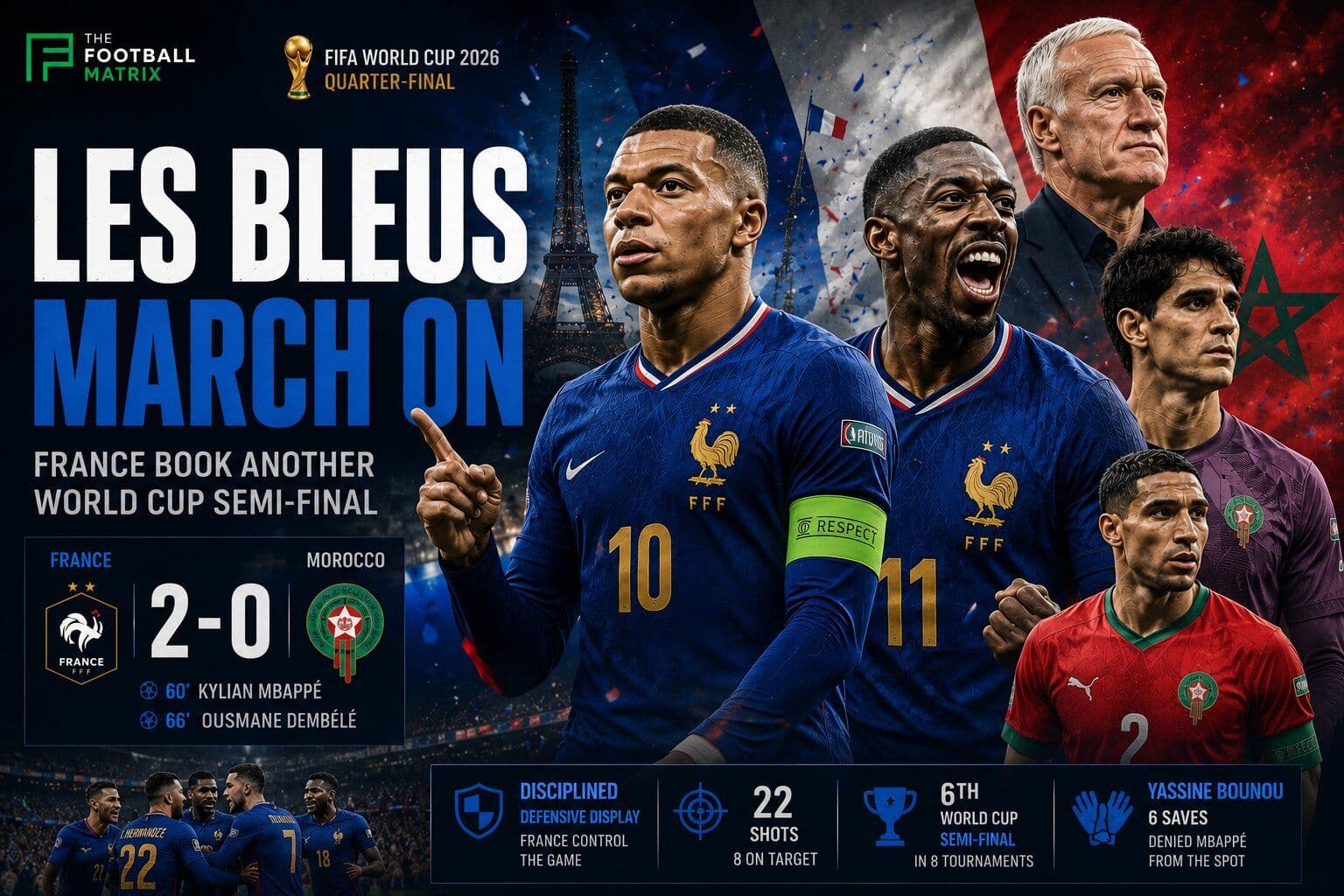
The underlying numbers support what the eye suggested—a controlled win rather than a scrappy one settled by a soft penalty. Spain has now conceded just a single goal across seven matches in this World Cup, a record built on Unai Simón's 649-minute shutout streak in the group and knockout stages before Belgium finally scored in the quarter-finals.
There's also a personal record within the record. Yamal's involvement in the opening goal took his head-to-head mark against Mbappé in major international knockout football to five wins from five, spanning Euro 2024, the Nations League, and now the World Cup. Whatever narrative France wanted to build around their forward reasserting himself on the biggest stage, Yamal's numbers continue to tell a different story.
Was It Really This One-Sided?
Fairness demands a couple of caveats. France's defensive structure was significantly compromised when William Saliba, arguably their most important defender due to his recovery speed and ability to sustain a high line, was forced off with a muscular injury after 29 minutes. Maxence Lacroix is a capable replacement, but he and Upamecano had no time to develop the understanding that allowed Saliba's positioning to cover for others. The gap that opened between France's midfield and defence in the second half—the space Dani Olmo and Alex Baena used to dictate tempo—was, at least partly, a consequence of that injury rather than pure tactical superiority.
There’s a second point worth mentioning. Spain didn’t chase a third goal once they had the lead they needed. The final half hour saw them drop into a deeper, more conservative block, content to see the game out rather than continue attacking with the fluency of the first hour. Purists who prefer De la Fuente's side in full possession-based flow might view that as a compromise of identity. However, it is also, quite plainly, what winning teams do at this stage of a World Cup.
The Post-Mortem of a Giant: The End of Didier Deschamps' Era
Saliba's Exit and the Defensive Collapse
Deschamps' final match in charge will be remembered partly for what he couldn’t control. Losing Saliba in the first half against a team with Yamal and Oyarzabal's pace in behind was always going to hurt, and Adrien Rabiot's early booking—for a foul on Olmo in the eighth minute—meant Deschamps had to withdraw him at half-time to avoid a sending-off. Manu Koné's introduction steadied things defensively, but by then France were already chasing a game against opponents who don’t need to be chased far before they punish you.
The triple change in the 57th minute—Désiré Doué and Theo Hernandez for Barcola and Digne, Rayan Cherki for Olise—arrived with intent, but by that stage Spain had already scored their second goal, and the game's pattern was set.
14 Years of Glory Ends in Tactical Isolation
What made the defeat feel conclusive rather than unlucky was the manner in which France struggled to solve a problem they had been shown all tournament: a compact, disciplined block that refused to be baited into transition football. Deschamps built his legacy on turning talented individuals into an efficient collective, largely through defensive solidity and lethal counter-attacking. Against a Spain side that removed the space for that kind of football, his team had few alternative ideas.
Zinedine Zidane is reportedly the leading candidate to replace him, although the French Football Federation has made no official announcement. Whoever takes over inherits a squad still containing Mbappé, Olise, and a wealth of promising attacking talent—but also a tactical rebuild that Deschamps' final performance suggested was overdue.
For more on the manager's tenure, [Didier Deschamps' legacy with the French national team] is worth revisiting in full.
What Comes Next for Spain
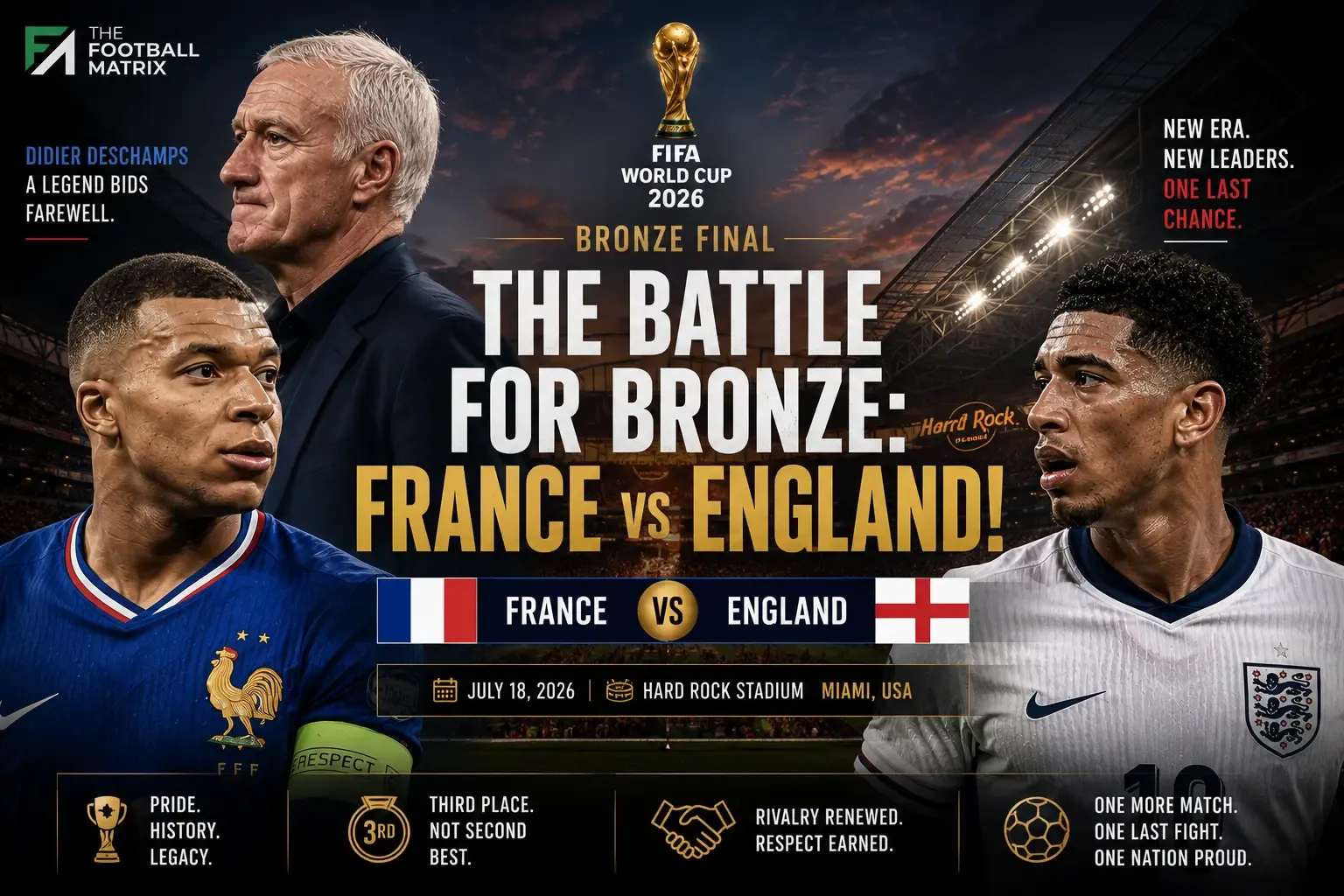
De la Fuente's side now turn to MetLife Stadium on July 19, where they'll face the winner of England's semi-final against Argentina. France, denied a place in the final, will play in the third-place match in Miami on July 18—a fixture that will double as an audition for players hoping to convince their new manager of their worth in the next cycle. Saliba, ruled out of that game, will undergo scans to determine his fitness ahead of Arsenal's pre-season.
Individual reputations have shifted too. Pedro Porro's tournament—capped by a goal that will be replayed for years in Spain—has reportedly put him on the radar of several leading European clubs, with suggestions that Tottenham Hotspur could field bids in excess of £70 million for their right-back. While nothing is confirmed, the timing of the speculation, arriving the morning after a World Cup semi-final goal, illustrates how quickly reputations can change in this sport.
None of that will occupy De la Fuente's thoughts this week. His team has conceded once in seven matches, matched a 37-game unbeaten record that has stood since Italy's own golden run, and are two performances away from the rarest achievement in international football—the European Championship and World Cup double. Whether their opponent is England or Argentina, Spain will arrive at MetLife Stadium as favourites for a reason that transcends reputation: they have shown, repeatedly, that they know what to do with the ball and precisely how to make life miserable for teams without it.
For background on how this Spain side has evolved, read more on Spain's tactical evolution under Luis de la Fuente.
Support The Football Matrix on Google Search
Add us as a preferred source to highlight our transfer & injury intelligence in your search results.
☕ Keep The Matrix Running
The Football Matrix is independent — no ads, no paywalls, no corporate sponsors. If our coverage adds value to your matchday, consider buying us a coffee. It goes directly toward hosting, infrastructure, and keeping the editorial free for everyone.
Discussion (0)
Loading comments...