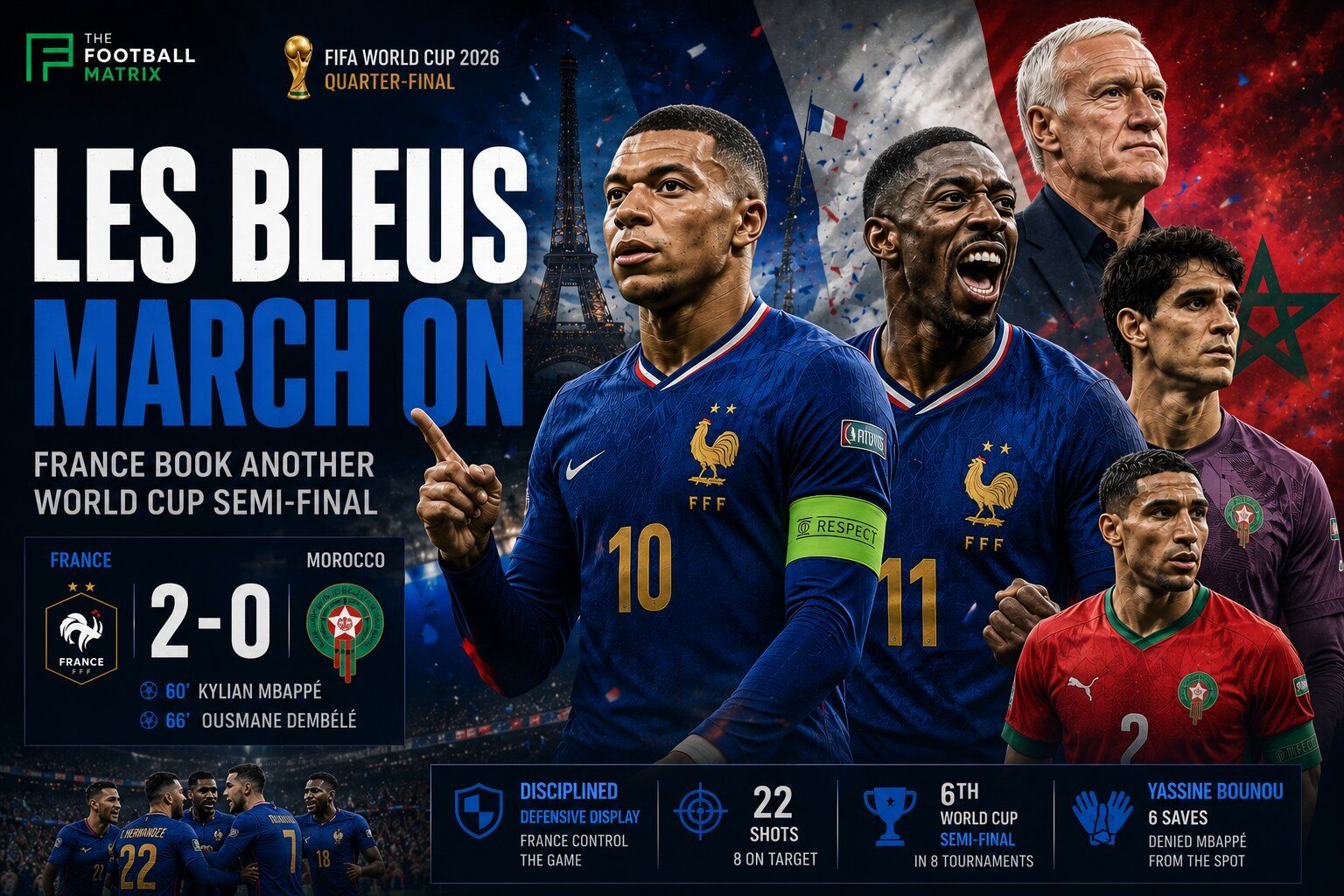
Boston Stadium staged a rematch four years in the making, and for much of the first half Morocco threatened to make it far more uncomfortable than France expected. Didier Deschamps' side eventually secured a 2-0 victory, but the result was built as much on resilience as technical superiority. Kylian Mbappé recovered from a first-half penalty miss to inspire a decisive second-half surge, while Ousmane Dembélé capped France's tactical adjustments with the goal that settled the contest. France now reach a third consecutive World Cup semi-final, a feat achieved by only a handful of nations in tournament history.
The First-Half Turning Point: Bounou Denies Mbappé
The defining moment of the opening half arrived in the 28th minute. Mbappé skipped past Noussair Mazraoui inside the penalty area before being brought down, prompting a lengthy VAR review that ultimately confirmed the spot kick. The extended delay shifted the rhythm of the moment, and Mbappé failed to capitalize. His penalty lacked its usual conviction, allowing Yassine Bounou to read the strike comfortably and preserve Morocco's belief.
The incident reflected France's broader tactical approach. Deschamps deployed Manu Koné and Adrien Rabiot as disciplined midfield screens, allowing Michael Olise and Désiré Doué to occupy the half-spaces between Morocco's compact defensive lines. The movement repeatedly forced Morocco's full-backs into difficult decisions, and Mazraoui's foul stemmed directly from one such overload.
Despite controlling territory, France reached halftime without a breakthrough. Morocco, meanwhile, defended with discipline and successfully limited Dembélé's influence by narrowing their defensive shape whenever possession shifted toward the right flank.
France's Six-Minute Burst Changes the Match
France emerged after the interval with a subtle but significant tactical adjustment. Rather than remaining high against Morocco's defensive line, Mbappé increasingly drifted into deeper positions on the left, drawing Achraf Hakimi away from his usual defensive zone and creating space between the lines.
The adjustment paid off in the 60th minute. Mbappé timed his movement perfectly before driving a composed finish beyond Bounou, putting the penalty miss firmly behind him and rewarding France's growing territorial dominance.
Six minutes later, France exploited the same structural weakness again. Morocco's defensive line shifted toward Mbappé, leaving space for Dembélé to attack an inverted delivery and finish confidently for 2-0. The goal transformed a tense contest into one France controlled comfortably through the closing stages.
Tactical Breakdown: Control Rewarded
The final statistics reflected France's superiority once the second-half adjustments took hold. They finished with 22 shots to Morocco's five, placed 8 efforts on target compared to Morocco's one, and held a modest 48 percent share of possession. More revealing than the possession figure was France's control of territory, repeatedly forcing Morocco into deep defensive positions without allowing meaningful counter-attacking opportunities.
Morocco's task became considerably harder without Ismael Saibari, whose tournament-ending injury removed one of their primary progressive midfielders. While Mohamed Ouahbi's side remained organized for long periods, they struggled to advance play through central areas and rarely created situations capable of seriously testing France's back line.
France's defensive consistency continues to underpin their tournament. William Saliba and Dayot Upamecano again formed an authoritative central partnership, while Deschamps managed the closing stages intelligently by withdrawing Mbappé, Jules Koundé and Doué once the result was effectively secured, preserving key players ahead of the semi-finals.
Looking Ahead to Dallas
France will face the winner of Spain versus Belgium in Dallas on July 15, with both potential opponents presenting very different tactical challenges. Spain's possession-heavy control would test France's defensive discipline over extended periods, while Belgium's direct attacking approach would ask different questions in transition.
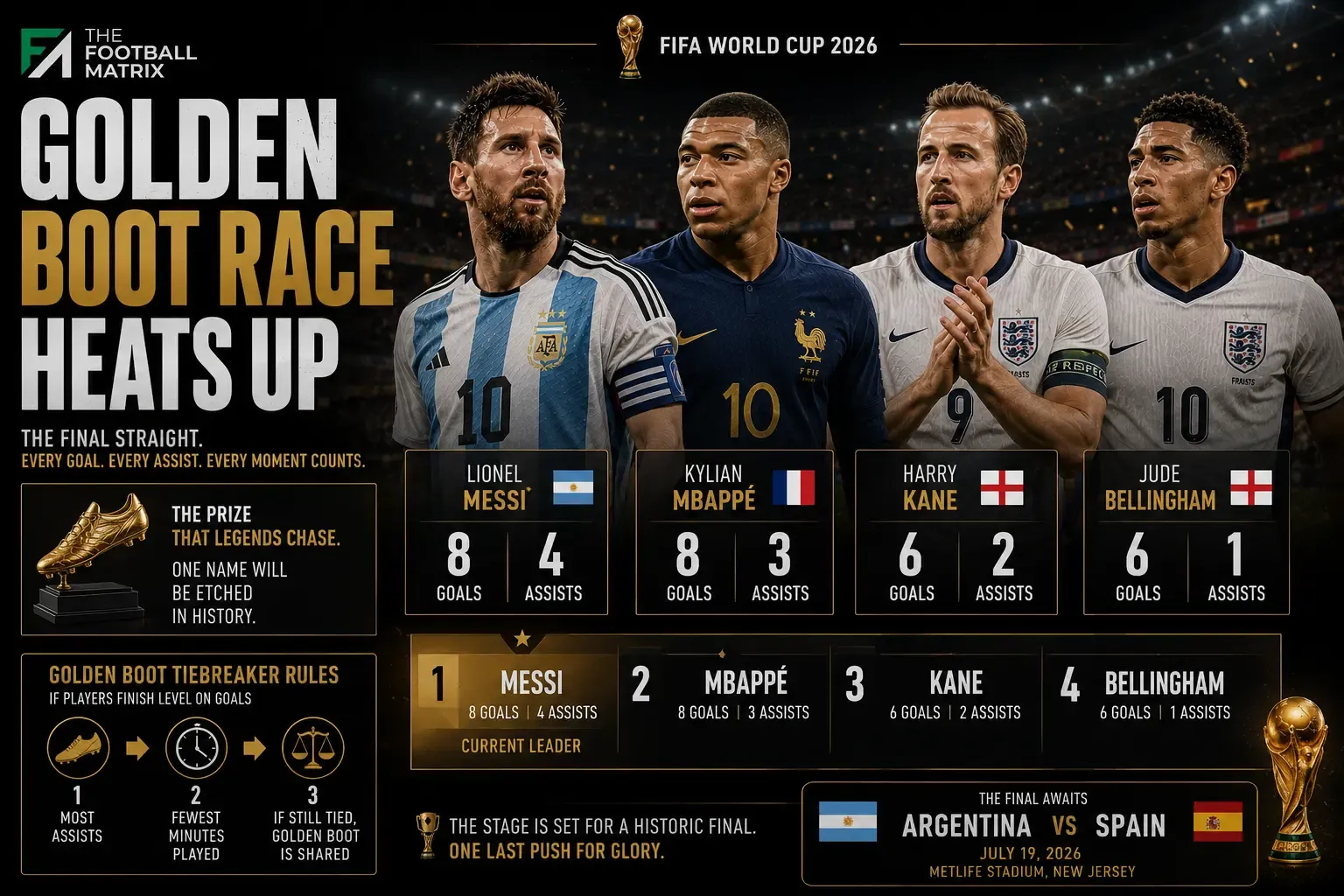
Mbappé's goal also draws him level with Lionel Messi on eight tournament goals, ensuring the Golden Boot race remains one of the competition's defining individual stories.
Beyond the individual accolades, France's achievement carries broader historical significance. Reaching a third consecutive World Cup semi-final places Deschamps' side alongside some of the tournament's most consistently successful national teams. Their latest victory was not built on attacking brilliance alone, but on the composure to recover from adversity, adjust tactically and gradually impose their superiority against one of the competition's most disciplined defensive sides.
Support The Football Matrix on Google Search
Add us as a preferred source to highlight our transfer & injury intelligence in your search results.
☕ Keep The Matrix Running
The Football Matrix is independent — no ads, no paywalls, no corporate sponsors. If our coverage adds value to your matchday, consider buying us a coffee. It goes directly toward hosting, infrastructure, and keeping the editorial free for everyone.
Discussion (0)
Loading comments...