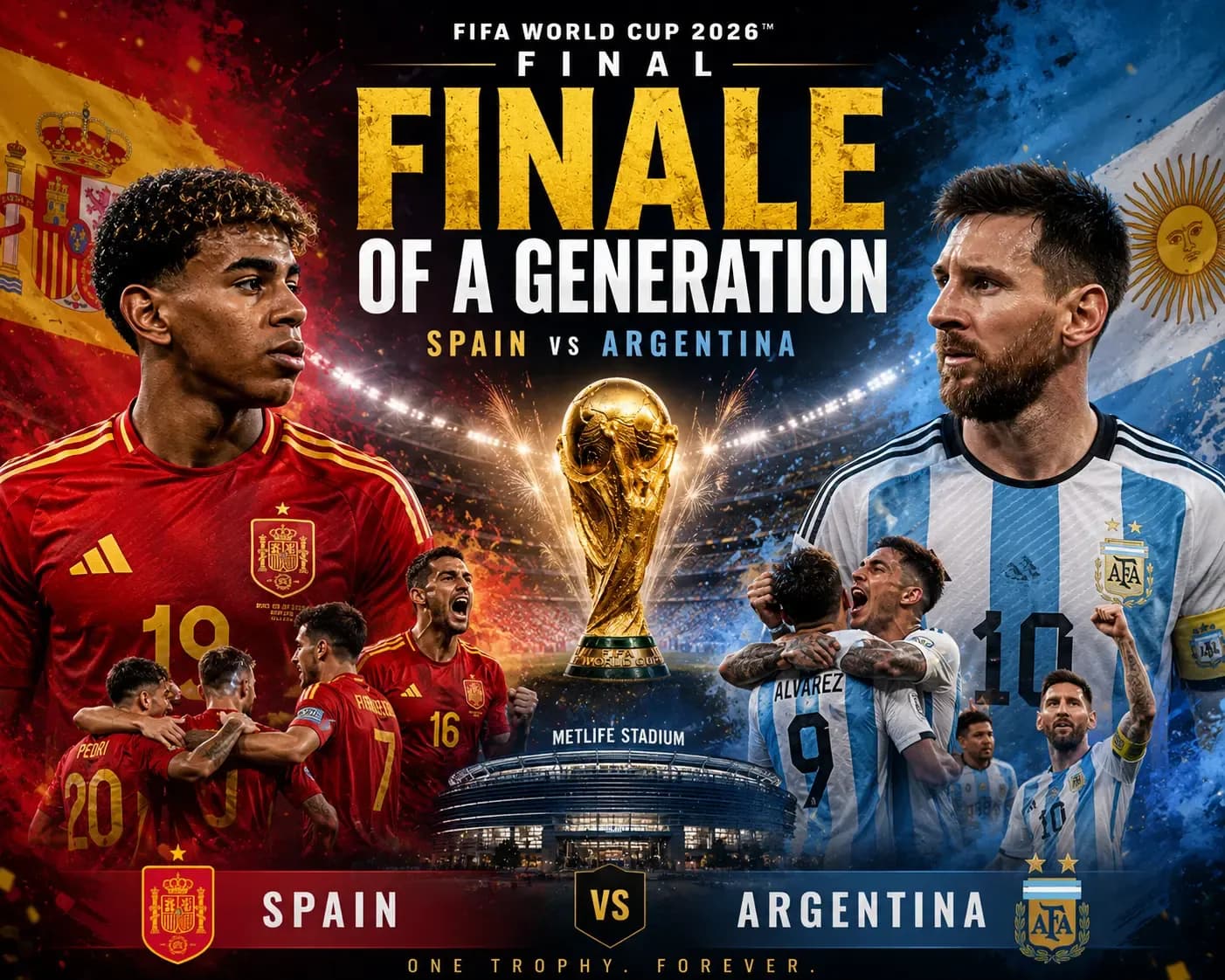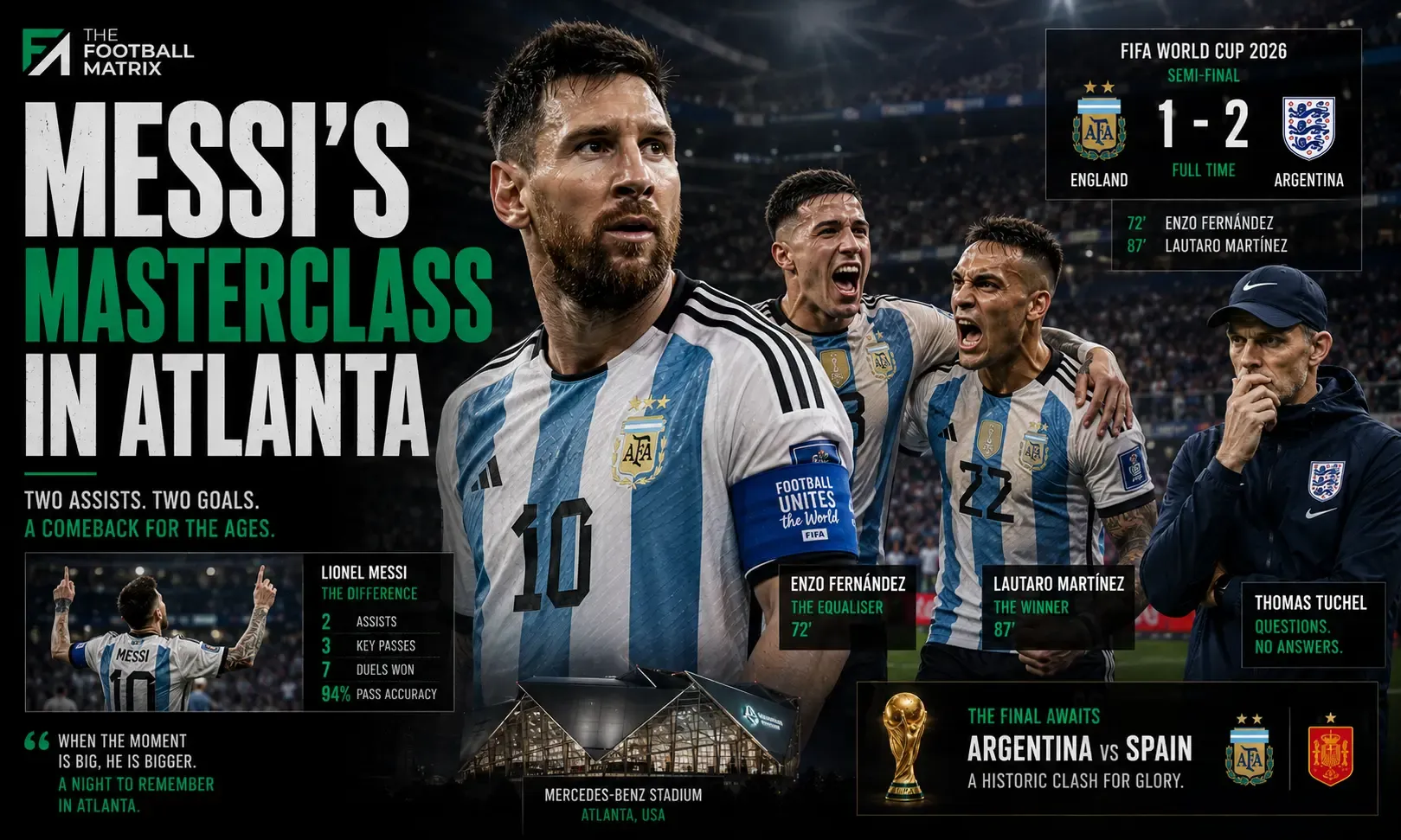
Whatever happens at the New York New Jersey Stadium on Sunday, the Premier League wins.
That's not hyperbole. When Argentina and Spain walk out for the 2026 World Cup final, 13 players contracted to English top-flight clubs will be on the pitch or the bench, ensuring that the league's clubs will celebrate a world champion regardless of the scoreline. This fact underscores the Premier League's financial gravity and its influence on the two finalists.
Argentina and Spain have taken markedly different routes to reach this point, but both teams have relied heavily on players who compete weekly under English managers. Six members of Lionel Scaloni's squad play in the Premier League, while Spain, coached by the successor to Luis de la Fuente, counts seven. Together, they represent five different Premier League clubs — a reminder that the competition for domestic supremacy in England has become a proving ground for the World Cup itself.
Who's Involved — And Why It Matters
The distribution of players across various positions tells its own story. This isn't about one dominant Premier League club supplying a goalkeeper and a squad player to fill numbers. Starting berths, captaincy roles, and match-winning contributions are all represented.
| Player | Premier League Club | Nation | Tournament Impact |
|---|---|---|---|
| Emiliano Martínez | Aston Villa | Argentina | Started all seven matches; decisive knockout saves |
| Cristian Romero | Tottenham Hotspur | Argentina | Led all centre-backs with 14 tackles and 32 duels won |
| Lisandro Martínez | Manchester United | Argentina | Goal and assist across the knockout rounds |
| Alexis Mac Allister | Liverpool | Argentina | Opened scoring in the quarter-final; unbeaten in World Cup career |
| Enzo Fernández | Chelsea | Argentina | Structural anchor in Scaloni's midfield rotation |
| Marcos Senesi | Tottenham Hotspur | Argentina | Late defensive addition, composed in the group stage |
| Rodri | Manchester City | Spain | Dictated tempo and defensive structure |
| Martin Zubimendi | Arsenal | Spain | Press-resistant, near-faultless in possession |
| Mikel Merino | Arsenal | Spain | Late winner against Belgium |
| David Raya | Arsenal | Spain | Consistent shot-stopping across the tournament |
| Pedro Porro | Tottenham Hotspur | Spain | Width and recovery pace on the right |
| Yeremy Pino | Crystal Palace | Spain | Direct, vertical impact from the bench |
What stands out is not just the number of players but the variety of roles they occupy. Martínez is the crucial last line of defence for Argentina. Romero and Porro are tasked with solving specific defensive challenges. Rodri and Enzo Fernández serve as pivotal figures in their teams' strategies. This final is built, in large part, on the foundations laid in the Premier League's rigorous week-to-week competition.
Argentina's Chance to Rewrite History
For four Argentine players, Sunday carries significance beyond the trophy itself. Emiliano Martínez, Lisandro Martínez, Cristian Romero, and Alexis Mac Allister were part of the squad that triumphed in Qatar in 2022. Should Argentina retain the title, this quartet would become the first players in the tournament's history to win the World Cup twice while actively representing a Premier League club.
This is a noteworthy distinction. While repeat World Cup winners are not rare, what makes this situation unique is the Premier League context. These players are not at the tail end of their careers; Romero is arguably playing the best football of his career at Tottenham, and Mac Allister's move to Liverpool has sharpened his influence on both club and country. Their continued growth in England's top flight has paralleled, rather than hindered, their success with Argentina.
Marcos Senesi's inclusion adds a different subplot. A later addition to Scaloni's squad, his composure during the group stage suggests that Argentina's depth — historically viewed as a weakness — has matured into a genuine strength.
Why Arsenal Are the Quiet Winners of This Final
Beneath the national flags lies a more specific narrative: no club has more players in this final than Arsenal.
David Raya, Martin Zubimendi, and Mikel Merino all feature for Spain, providing representation in goal (even though Raya is not the no.1 choice for Spain), central midfield, and the crucial No.8 role that often determines tight knockout matches. This highlights Arsenal's recruitment strategy over the past two seasons, which has focused on acquiring players suited for international-level tournament football — technically secure, tactically disciplined, and comfortable under pressure.
Zubimendi's impact is particularly noteworthy given the initial scepticism surrounding his valuation when Arsenal signed him. Press resistance in central midfield may not always make headlines, but at World Cup level — where turnovers in dangerous areas are ruthlessly punished — it often determines control versus chaos. Merino, meanwhile, has built a reputation for arriving in the box at the right moment. His stoppage-time winner against Belgium reinforces why Arsenal pursued him.
The Midfield Duel That Will Decide the Final
Beyond the occasion, the final will likely be settled in a narrow strip of the pitch: the space between the two holding midfielders.
Rodri's influence for Spain mirrors his role at Manchester City. He may not be the player making eye-catching runs or the decisive final pass, but he is crucial in maintaining shape under pressure, often dropping between centre-backs to control defensive structure and dictating when Spain accelerates or maintains possession. Opponents who fail to press him early tend to find themselves chasing the ball.
Enzo Fernández's role for Argentina is less about control and more about balance. Scaloni has positioned him as the structural link between Argentina's defensive block and more expressive attacking players, trusting him to cover ground and recycle possession quickly to enable transitions without compromising defensive integrity.
Neither player is likely to produce highlight-reel moments. Instead, their contributions will significantly influence whether their teams concede opportunities. If Spain controls the game, it will be due to Rodri winning this duel. Conversely, if Argentina counters effectively, Enzo Fernández's positioning will be a key factor.
A Final That Belongs to Everyone — and No One
There is a temptation to frame this final purely through a nationalistic lens — Argentina defending their crown, Spain chasing their first title since 2010. However, the Premier League angle adds a layer that should not be dismissed as trivial. Thirteen players who spend nine months of the year competing against each other in England will spend 90 minutes on Sunday striving to win the sport's biggest prize for two different countries.
For the league itself, there is no downside. Clubs like Arsenal, Tottenham, Chelsea, Manchester City, Manchester United, Aston Villa, and Crystal Palace have a stake in the outcome, regardless of allegiance. For four Argentine players, Sunday presents a rare opportunity to make history twice over, all while remaining in the Premier League.
Support The Football Matrix on Google Search
Add us as a preferred source to highlight our transfer & injury intelligence in your search results.
☕ Keep The Matrix Running
The Football Matrix is independent — no ads, no paywalls, no corporate sponsors. If our coverage adds value to your matchday, consider buying us a coffee. It goes directly toward hosting, infrastructure, and keeping the editorial free for everyone.
Discussion (0)
Loading comments...