Before a ball was kicked, concerns about the 2026 FIFA World Cup were loud and consistent. Many argued that a 48-team tournament would dilute quality, stretch player welfare to its limits, and turn the group stage into a series of one-sided mismatches. Three weeks and 96 matches later, those fears appear misplaced.
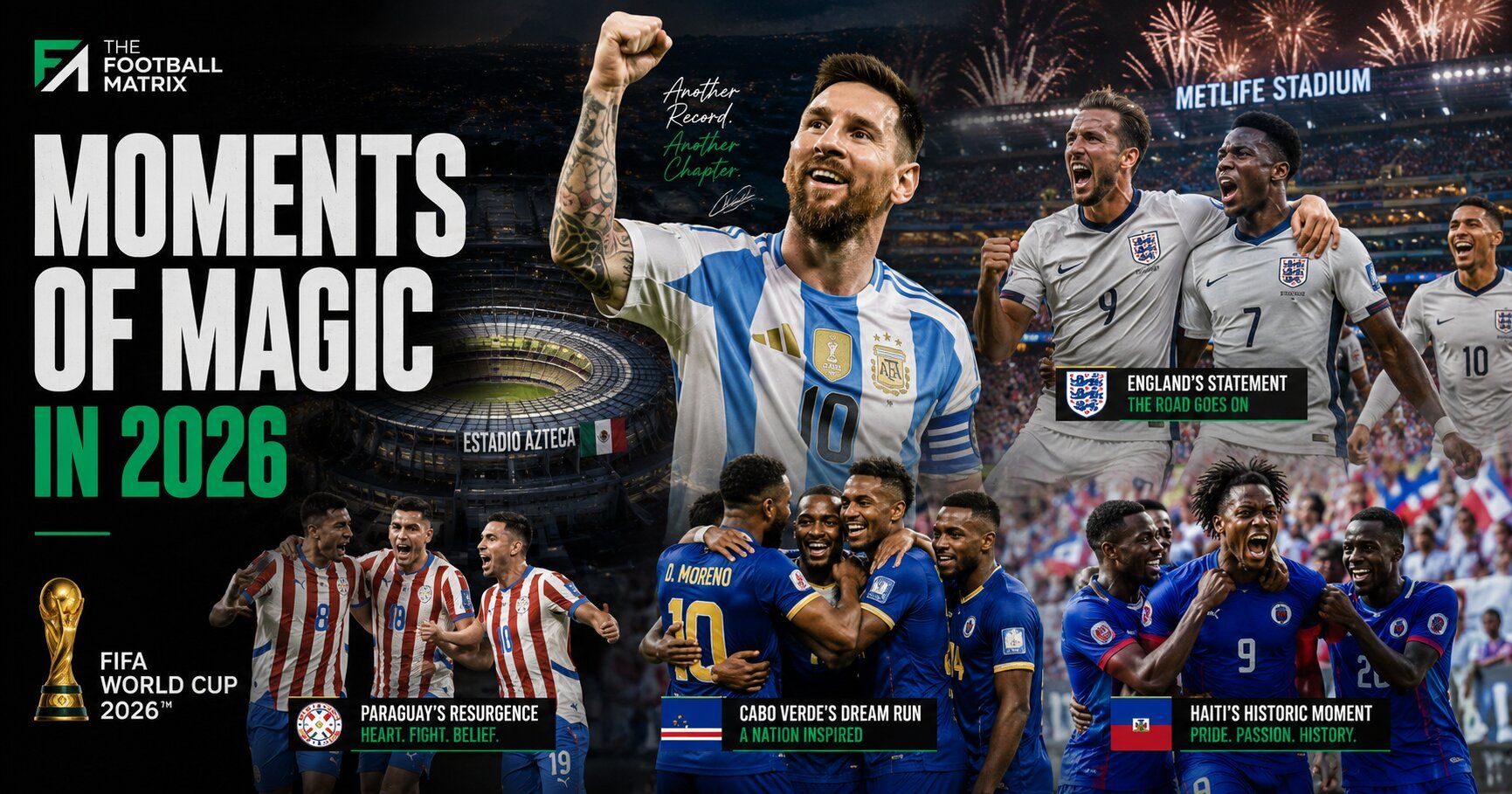
Instead, North America has delivered a tournament defined by shocking results, defensive heroics, and moments of pure sporting romance. Lionel Messi has rewritten the record books at the age of 39. England survived a red card and a hostile Azteca crowd to end decades of hoodoo. Germany lost a penalty shootout for the first time in their World Cup history. Additionally, two of the smallest footballing nations on the planet provided some of the most emotionally resonant scenes of the competition.
With the semi-finals now set — France against Spain in Dallas on July 14, and England against Argentina in Atlanta a day later — it's worth pausing to look back at the moments that have made this edition feel unlike any other. Here are the five that stand above the rest.
1. Lionel Messi Rewrites the History Books
Surpassing Klose and Marta in Boston
On June 22, Lionel Messi achieved something no player, male or female, had done before him. Facing Austria in the group stage, he missed an early penalty — a moment that might have haunted a lesser competitor — but responded by scoring twice in a comfortable 2-0 win. Those two goals brought his total to 18 for his World Cup career, surpassing Miroslav Klose's men's record of 16 and Marta's all-time senior record of 17 on the same evening.
The scale of that achievement is noteworthy. Klose's record had stood since 2014 and was built across four tournaments characterized by relentless, poacher's instinct finishing. Marta's mark, set during an era when the women's game received far less exposure, represented decades of sustained excellence. Messi eclipsed both records in a single group-stage performance, at an age when most elite forwards have long since retired from international football.
The 39-Year-Old GOAT’s Final Crusade
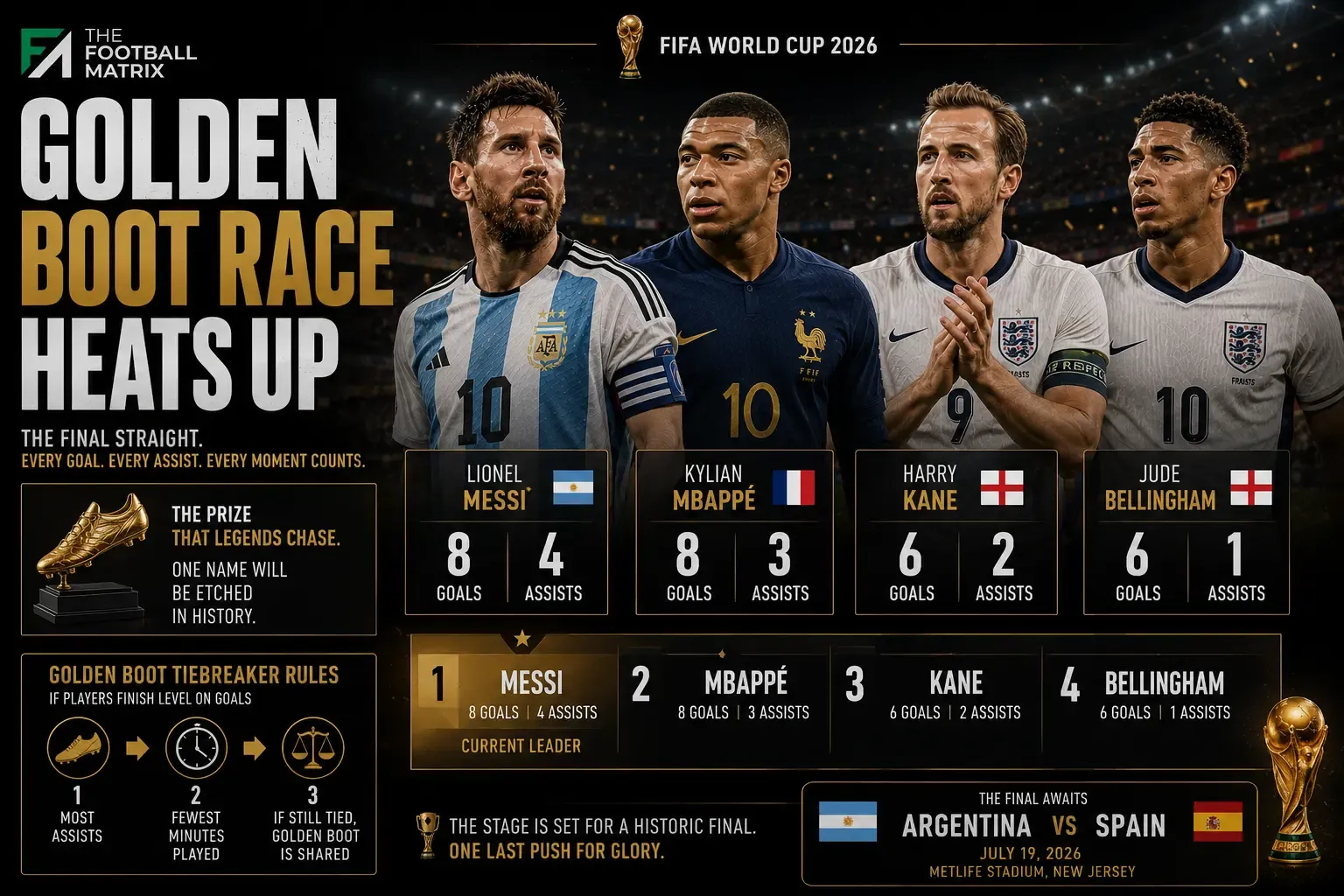
Messi has not stopped there. His tournament tally now stands at eight goals, keeping him in a tight race for the 2026 World Cup Golden Boot alongside Kylian Mbappé. His all-time World Cup goal count has climbed to 21 across 31 appearances — a number that may stand for a generation, given how few players reach four World Cups, let alone score prolifically in all of them.
This run is compelling not only for the volume of goals but also for the context. Against Egypt in the Round of 16, Messi produced a late intervention when the tournament threatened to eliminate Argentina prematurely — a defining moment that has characterized his relationship with this competition since 2014. Regardless of whether this proves to be his last World Cup, he has already secured his claim to the title of the tournament's greatest-ever scorer.
2. Ten-Man England Banishes Azteca Ghosts
Surviving the "Temple of Doom"
Estadio Azteca has long carried its own mythology for English football. Diego Maradona's "Hand of God" moment in 1986 is etched into the collective memory of English supporters, and the stadium's altitude and atmosphere have made it one of the sport's most intimidating venues. On July 5, Thomas Tuchel's side finally exorcised those ghosts — and did it the hard way.
Jude Bellingham struck twice in quick succession to give England control, but the match turned chaotic in the second half. Defender Jarell Quansah was sent off in the 54th minute, leaving England to defend a slender lead against co-host Mexico in front of a hostile crowd, on a rain-soaked pitch, for more than 50 minutes. Mexico had never lost a World Cup match at the Azteca before that night. England left with a 3-2 victory and a piece of football history.
Tuchel’s Defensive Masterclass and a Historic TV Audience
What made this result possible was an immediate and decisive tactical adjustment. Tuchel abandoned his progressive 4-3-3 the moment Quansah was dismissed, introducing Dan Burn, Djed Spence, and John Stones to reshape the side into a flat 5-4-0 low block. The idea was simple in principle but demanding in execution: to choke the half-spaces that Mexico's wide players had been exploiting with altitude-fueled tempo and force everything into low-value crosses rather than incisive combinations through the middle.
It worked. England absorbed eleven minutes of stoppage-time pressure without conceding — a passage of play that will feature heavily in any breakdown of the tactical evolution of Thomas Tuchel's England. The result also broke new ground commercially, as a combined US audience of 45 million across Fox and Telemundo made it the most-watched soccer match in American broadcast history, surpassing every previous non-USMNT fixture. For a tournament co-hosted by the United States, that number matters almost as much as the scoreline itself.
3. Paraguay Shatters the German Penalty Myth
The Shootout Heist in Boston
Germany's record in World Cup penalty shootouts had been immaculate: wins over France in 1982, Mexico in 1986, England in 1990, and Argentina in 2006. This statistic was one that opposition players regarded with a mixture of respect and dread. On June 29, Paraguay — ranked 41st in the world, four tiers below Germany in FIFA's rankings — ended that run.
The match itself finished 1-1, with Julio Enciso heading Paraguay level in the 42nd minute after a high press forced a costly turnover in Germany's midfield. In the shootout that followed, Paraguay held their nerve to win 4-3, condemning Germany to their first-ever defeat from the spot at a World Cup.
Germany's Deepening International Crisis
Beyond the shock of the result, the underlying tactical narrative deserves attention. Paraguay's high-intensity, man-marking press specifically targeted Germany's double pivot, isolating the two central midfielders and denying them time to build attacks through the middle third. This approach exposed slow defensive transitions rather than being a simple case of one dramatic night going against the run of play.
The defeat marks Germany's third consecutive men's World Cup without reaching the last 16 — following group-stage exits in 2018 and 2022, culminating in this Round of 32 elimination. Three tournaments is enough to indicate a pattern rather than a blip, raising uncomfortable questions about the structural direction of a nation that has won the trophy four times.
4. Cabo Verde: The Giant-Killers of the Atlantic
Holding the Kings of Europe
Cabo Verde's population sits at roughly 500,000 — smaller than several English Premier League matchday crowds combined across a season. On June 15, in their first-ever World Cup match, they faced reigning European champions Spain and produced one of the group stage's genuine surprises: a goalless draw, secured despite facing 27 shots to none of their own.
Coach Bubista's side committed fully to a disciplined 5-4-1 defensive block, compressing the central channels and forcing Spain's midfield to recycle possession wide, where low-percentage crosses did little damage. Goalkeeper Vozinha, at 40 years old, made seven saves and repeatedly raced off his line to intercept balls played over the top — fulfilling a sweeper-keeper role that demanded both courage and precise anticipation against one of the tournament's most technically gifted attacks.
The Smallest Giant in World Cup History
That result alone would have made headlines; however, what followed cemented it as a genuine fairy tale. Cabo Verde became the smallest nation ever to reach the World Cup knockout stage, then pushed defending champions Argentina all the way to extra time in the Round of 32 before eventually losing 3-2. For a country with no professional domestic league to speak of, reaching that stage of the competition — and testing Argentina for 120 minutes — offers a strong rebuttal to critics who argued the 48-team format would produce only mismatches.
5. Haiti's Emotional 52-Year Wait Ends in Atlanta
Two Goals That Shook Morocco
Haiti's previous World Cup appearance came in 1974. Fifty-two years later, in front of an Atlanta crowd that included a substantial Haitian diaspora, they scored their first World Cup goals since that tournament — doing so twice, taking the lead on both occasions against a Morocco side that reached the semi-finals in 2022.
Lenny Joseph's cheeky back-heeled finish and Wilson Isidor's strike from distance produced scenes that transcended the eventual 4-2 scoreline. Haiti were eliminated, but for stretches of that match in Atlanta, they were ahead of one of the form teams in African football, playing without fear in front of supporters for whom the moment carried weight far beyond three points.
The Pure Romanticism of the World Cup
Results fade from memory faster than moments do, and this is one of those cases. The scoreboard read as a defeat, but the story was one of restoration — a footballing nation returning to the biggest stage after more than five decades away, reminding everyone why the World Cup still matters to communities well beyond the countries that regularly compete for the trophy. This storyline is often overlooked in mainstream analysis fixated on traditional heavyweights.
What This Means for the Expanded Format
None of this settles the debate around the 48-team expansion cleanly. Critics have reasonable grounds to argue that a competition now stretching to 104 matches raises legitimate concerns about player fatigue, particularly for squads without the depth of the traditional powerhouses. The inclusion of the eight best third-placed teams in the Round of 32 has also diluted some of the jeopardy that previously defined the closing group games, when a draw could eliminate a side outright.
However, set against those structural concerns is a tournament that has produced Cabo Verde's defensive stand against Spain, Haiti's return to the goalscoring column after half a century, and Paraguay's dismantling of a psychological record that had stood for over four decades. FIFA president Gianni Infantino has already confirmed that discussions around a potential 64-team expansion will follow, citing the commercial and competitive success of this edition. With total attendance surpassing 6.5 million, breaking the record set by the USA in 1994, the numbers support this direction even if football purists remain unconvinced.
Looking Ahead to the Semi-Finals
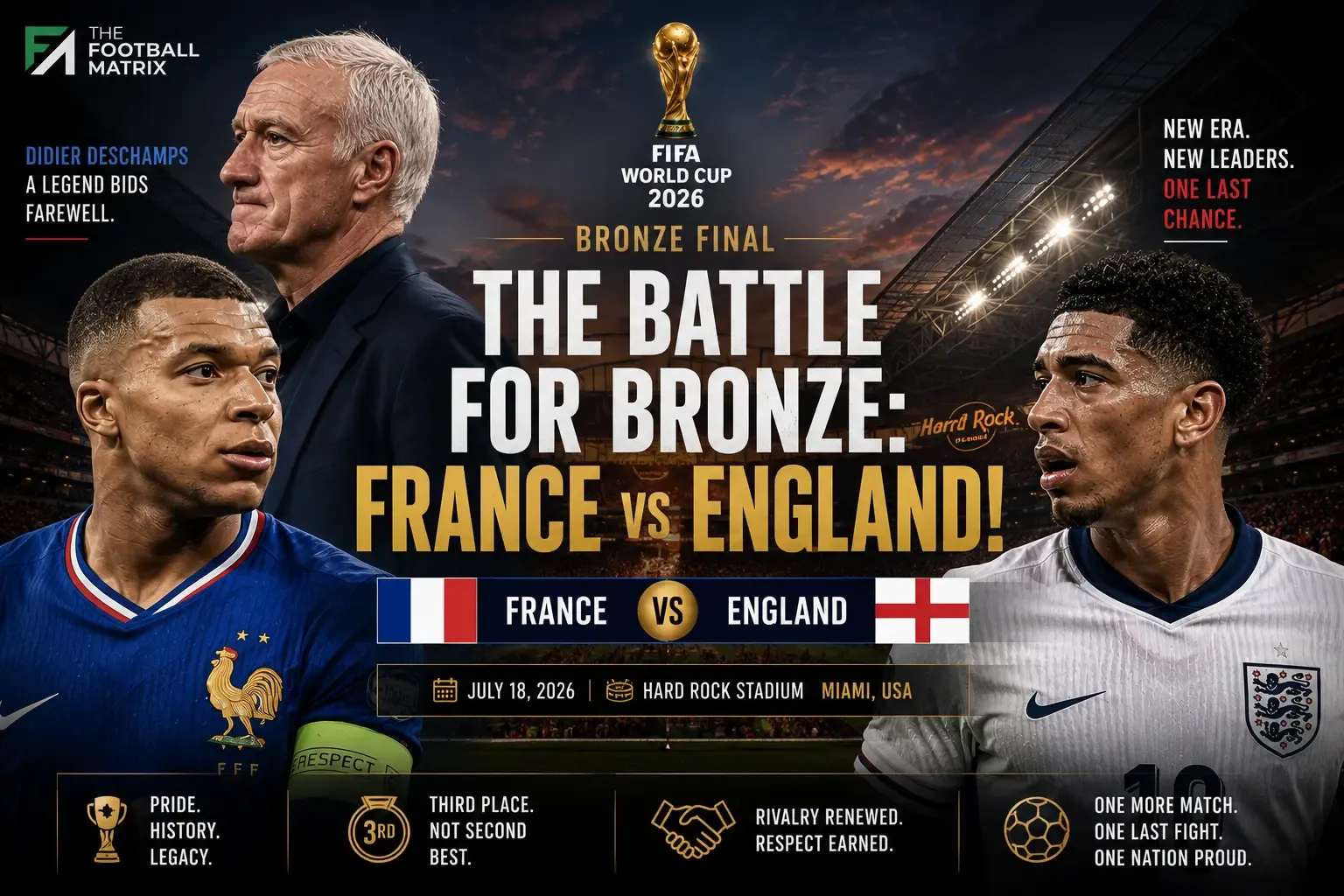
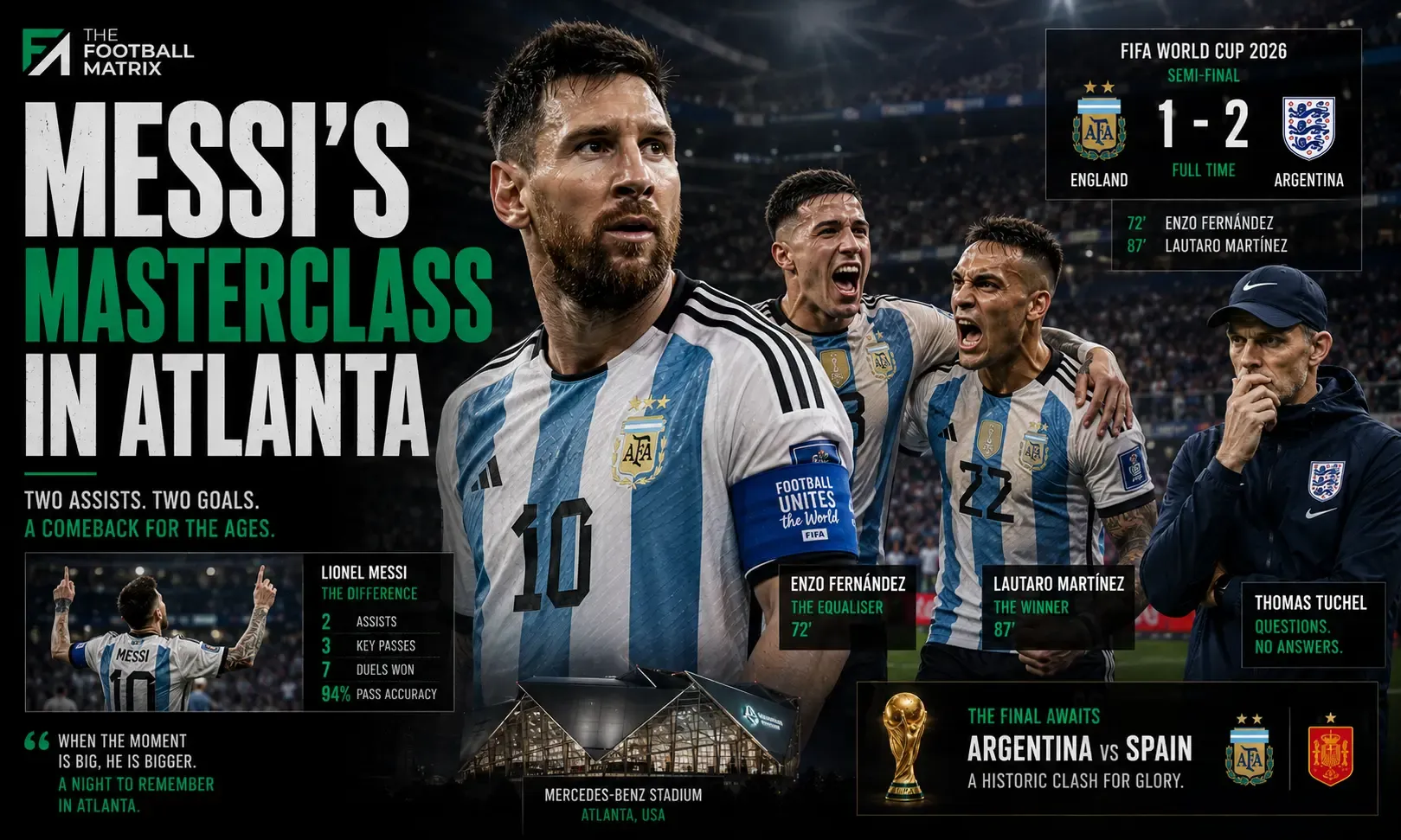
The knockout stage has not been short of quality alongside the romance. France face Spain in Dallas on July 14, a fixture that will likely hinge on Mbappé's ability to convert his narrow Golden Boot lead into impactful knockout-stage moments. A day later in Atlanta, England meets Argentina in a semi-final that pits Tuchel's newfound pragmatism against Messi's continued brilliance — a full preview is available in our breakdown of England's semi-final clash with Argentina.
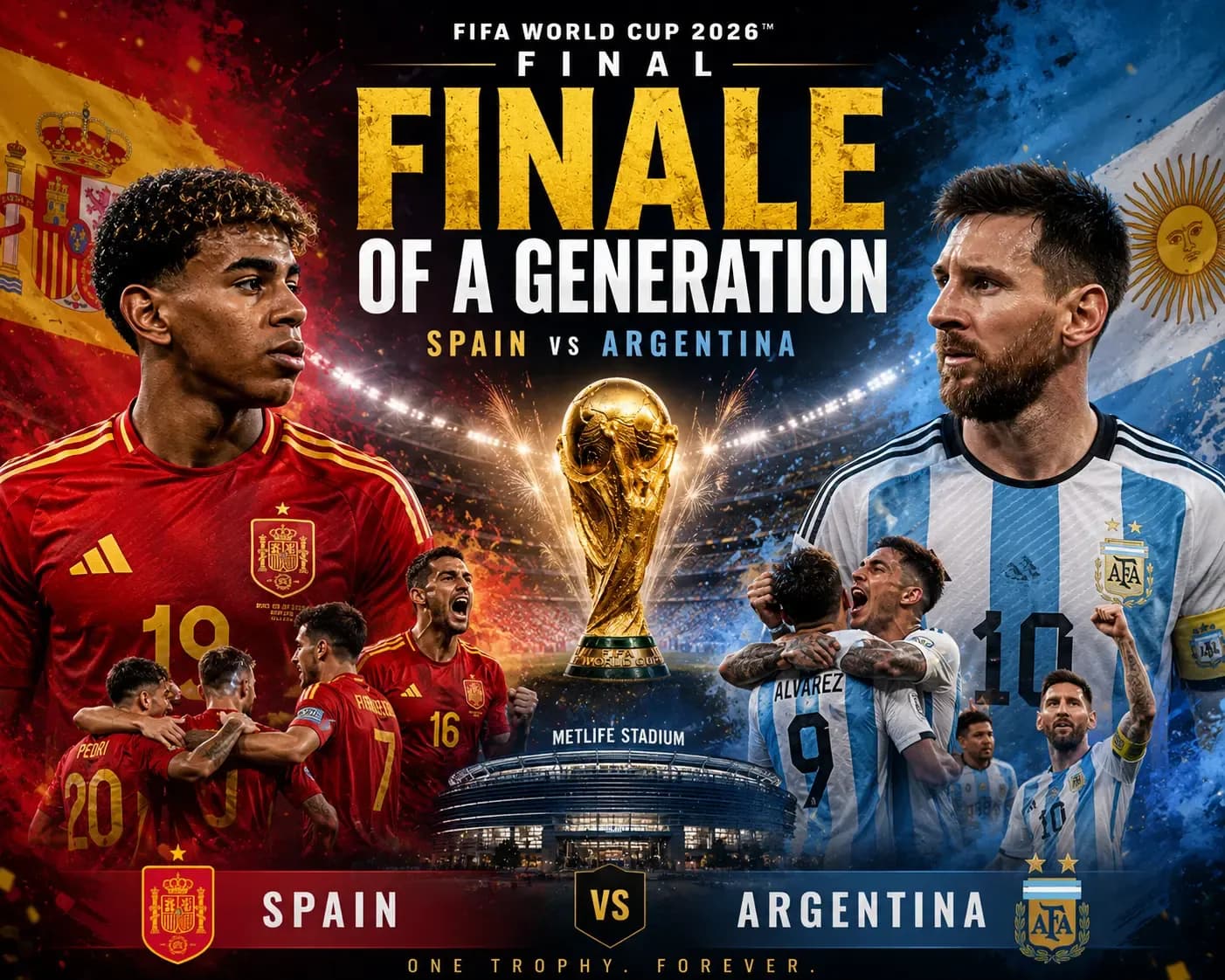
Whichever two teams reach MetLife Stadium on July 19, they will do so having survived a tournament that has, so far, silenced most of its early doubters. Whether the format itself proves sustainable in the long run remains an open question. What isn't in question is the quality of the drama it has already produced.
Which of these moments stood out to you the most? Drop your favorite in the comments below — whether it's Messi's record-breaking night in Boston, England's survival act at the Azteca, or the romance of Cabo Verde and Haiti's journeys, we want to hear which story defined the tournament for you.
Support The Football Matrix on Google Search
Add us as a preferred source to highlight our transfer & injury intelligence in your search results.
☕ Keep The Matrix Running
The Football Matrix is independent — no ads, no paywalls, no corporate sponsors. If our coverage adds value to your matchday, consider buying us a coffee. It goes directly toward hosting, infrastructure, and keeping the editorial free for everyone.
Discussion (0)
Loading comments...