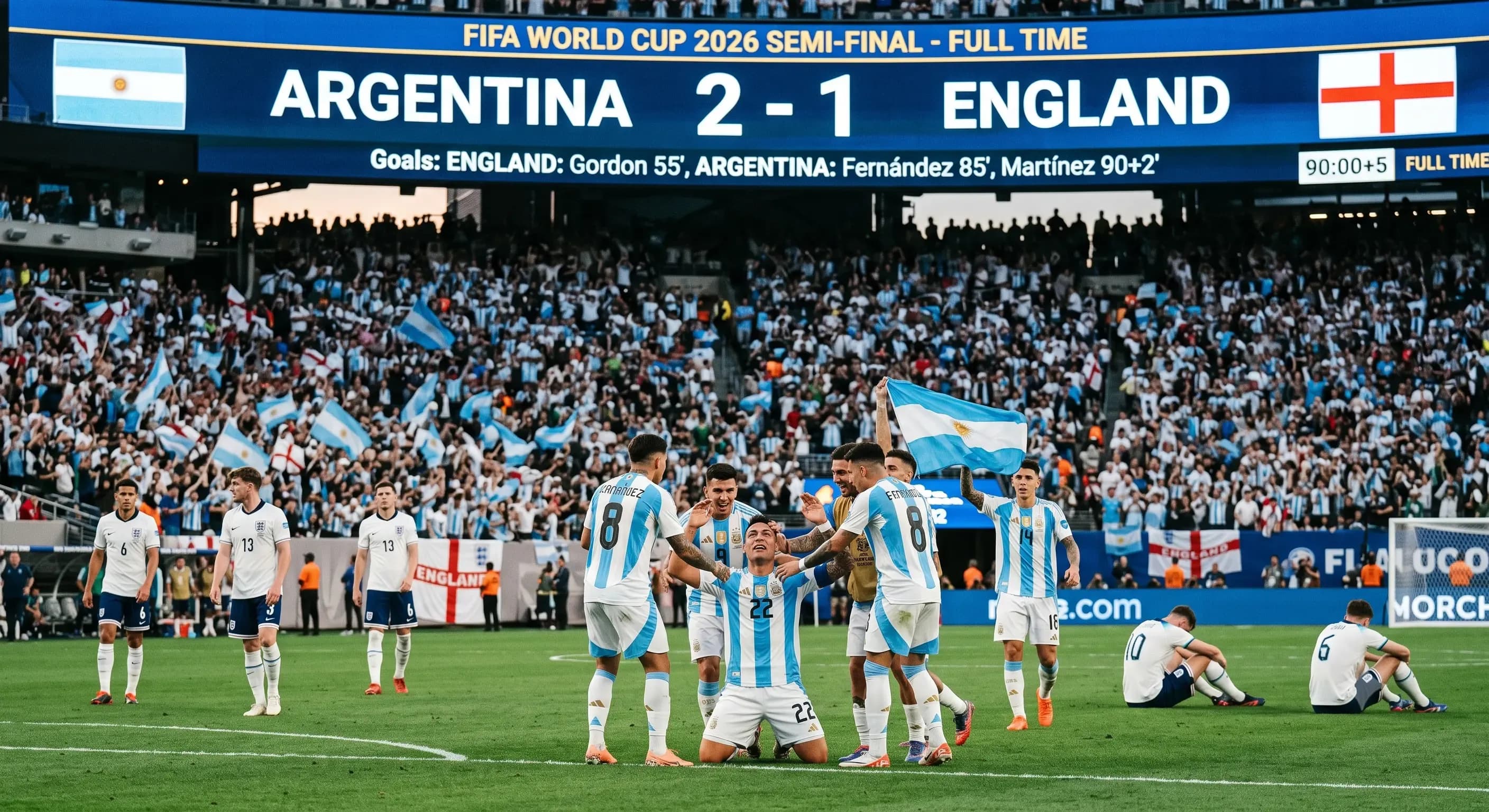

Ninety minutes stand between Lionel Scaloni's Argentina and a record that has persisted in various forms since the inaugural World Cup in 1930. If they win the final at the New York New Jersey Stadium, this Albiceleste side will not only retain the trophy they lifted in Qatar; they will complete the most statistically dominant campaign in the tournament's 96-year history—achieving a perfect eight wins from eight matches, in a format specifically designed to punish inconsistency.
That last point is significant.
Why Matching Brazil 2002 Was Already Historic
Argentina has arrived at this final having already equalled a benchmark few thought would be reached. Ronaldo's 2002 Brazil side, featuring Ronaldinho, Rivaldo, and Cafu—a front line that terrorised opponents throughout the tournament in South Korea and Japan—won all seven of their matches en route to the trophy. No team had matched that seven-for-seven record until Scaloni's Argentina did it this summer.
Winning every match at a World Cup may seem like a formality for serious contenders, but it rarely is. Tournament football rewards efficiency over spectacle, and the margins between progressing and elimination can often hinge on a single mistimed challenge or a moment of individual brilliance. Brazil in 2002 accomplished this feat over seven games; now, Argentina has done the same, but in a competition that requires one extra hurdle to clear.
The Extra Round That Changes the Maths
The detail that separates this Argentina run from every side that came before it is the expansion to a 48-team format, which introduced a Round of 32—an additional knockout tie that simply did not exist in previous editions. Brazil's 2002 side never had to navigate that extra game, nor did Uruguay in 1930, Italy in 1938, or Brazil in 1970.
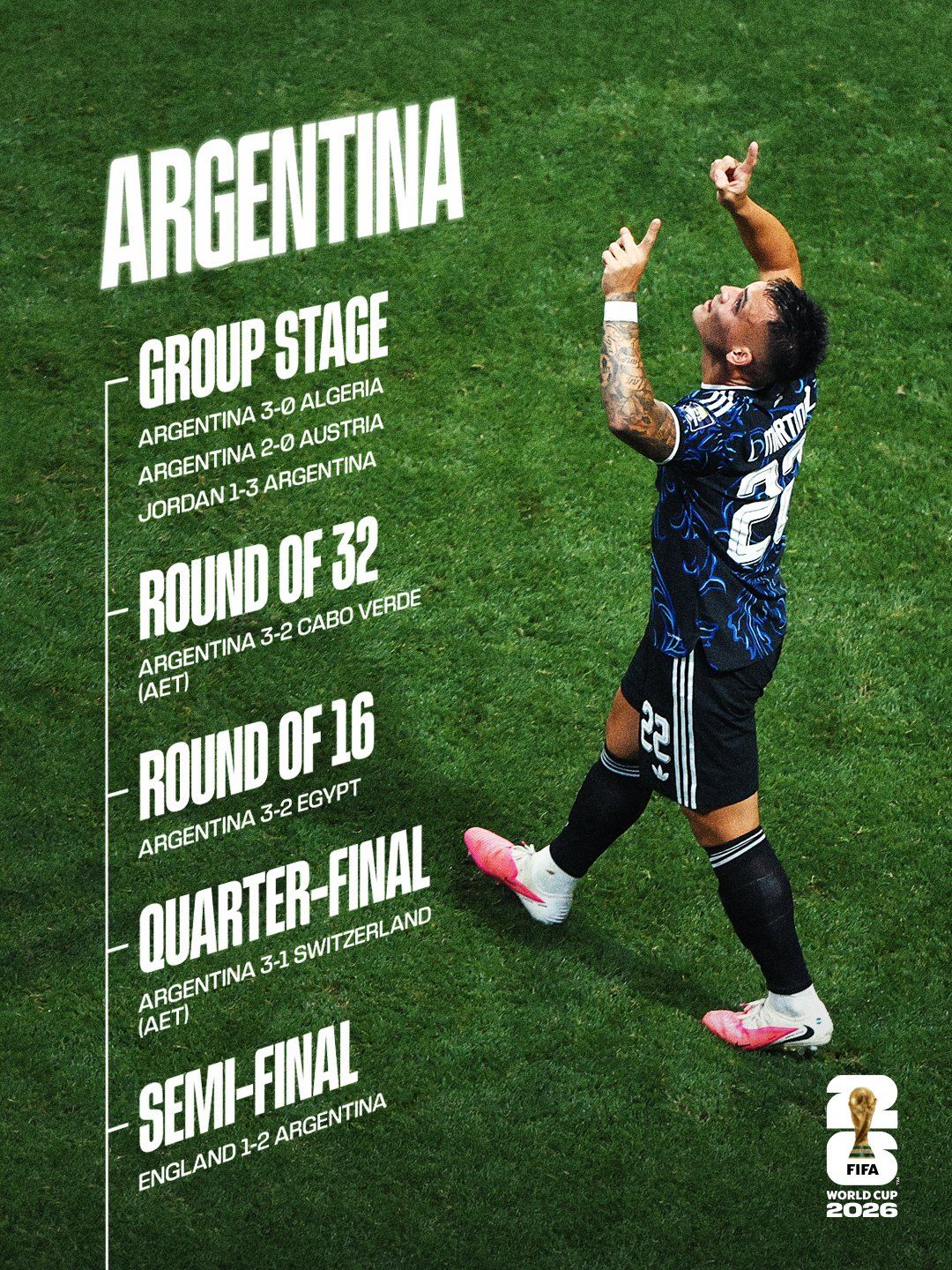
Thus, while seven straight wins tie the all-time record, an eighth win tonight would surpass it in tangible terms. It would mean Argentina successfully navigated a longer, more physically demanding gauntlet than any previous champion and still finished with a spotless record. Eight matches without dropping a single point is not just rare—under this new structure, it has never been accomplished because no team had previously had the opportunity.
Joining Football's Most Exclusive Club
A regulation-time victory would also make Argentina only the fifth World Cup winner in history to finish a tournament with a 100% win record—a group so small it fits comfortably in a bulleted list:
- Uruguay, 1930 — 4 wins from 4 matches
- Italy, 1938 — 4 wins from 4 matches
- Brazil, 1970 — 6 wins from 6 matches
- Brazil, 2002 — 7 wins from 7 matches
What stands out immediately is the era to which the first two entries belong. Uruguay and Italy achieved their perfect records in tournaments with far fewer matches, teams, and travel demands than in the modern game. Brazil's 1970 and 2002 sides are the more relevant comparisons—both remembered as among the most gifted attacking teams ever assembled and frequently cited in debates about the greatest World Cup-winning squads of all time.
If Argentina completes the set tonight, they wouldn't merely join that conversation; they would hold the strongest statistical claim of anyone in it, solely based on the degree of difficulty.
Why Perfection Is Harder Now Than It Used to Be
It's important to resist the temptation to treat these records as directly comparable across eras, as the game itself has evolved significantly. Modern international tournaments are defined by low defensive blocks that compress space and challenge attacking teams to find solutions in tight areas, coordinated pressing traps designed to force turnovers in dangerous zones, and fixture congestion that requires squads to manage fatigue as meticulously as they do tactics.
None of these challenges existed in any meaningful form in 1930 or 1938. Even by 2002, pressing systems were not nearly as structured or data-informed as they are today. A team going eight games unbeaten and dropping no points in this environment navigates a much more sophisticated set of obstacles than any of the four sides currently sharing that perfect record.
This isn't just about Messi adding another chapter to an already illustrious career, or Scaloni solidifying his status as one of the outstanding tournament coaches of his generation. It's about whether a team can achieve something genuinely unprecedented under conditions that make perfection harder to attain than at any previous point in the competition's history.
A Caveat Worth Remembering
None of this guarantees victory, and it shouldn't be assumed that the result is already determined. Spain has reached this final on merit, and finals have a tendency to humble favourites, irrespective of the statistics backing them.
Regardless of tonight's outcome, this Argentina side has already produced a run that stands alongside the best in the tournament's history. A win would elevate them from equalling greatness to redefining it. A loss, on the other hand, would still mean seven flawless performances out of eight, representing one of the most complete campaigns any World Cup contender has ever assembled.
Ninety minutes separate "one of the best" from "the best there has ever been." Few sentences in football carry more weight than that.
Support The Football Matrix on Google Search
Add us as a preferred source to highlight our transfer & injury intelligence in your search results.
☕ Keep The Matrix Running
The Football Matrix is independent — no ads, no paywalls, no corporate sponsors. If our coverage adds value to your matchday, consider buying us a coffee. It goes directly toward hosting, infrastructure, and keeping the editorial free for everyone.
Discussion (0)
Loading comments...