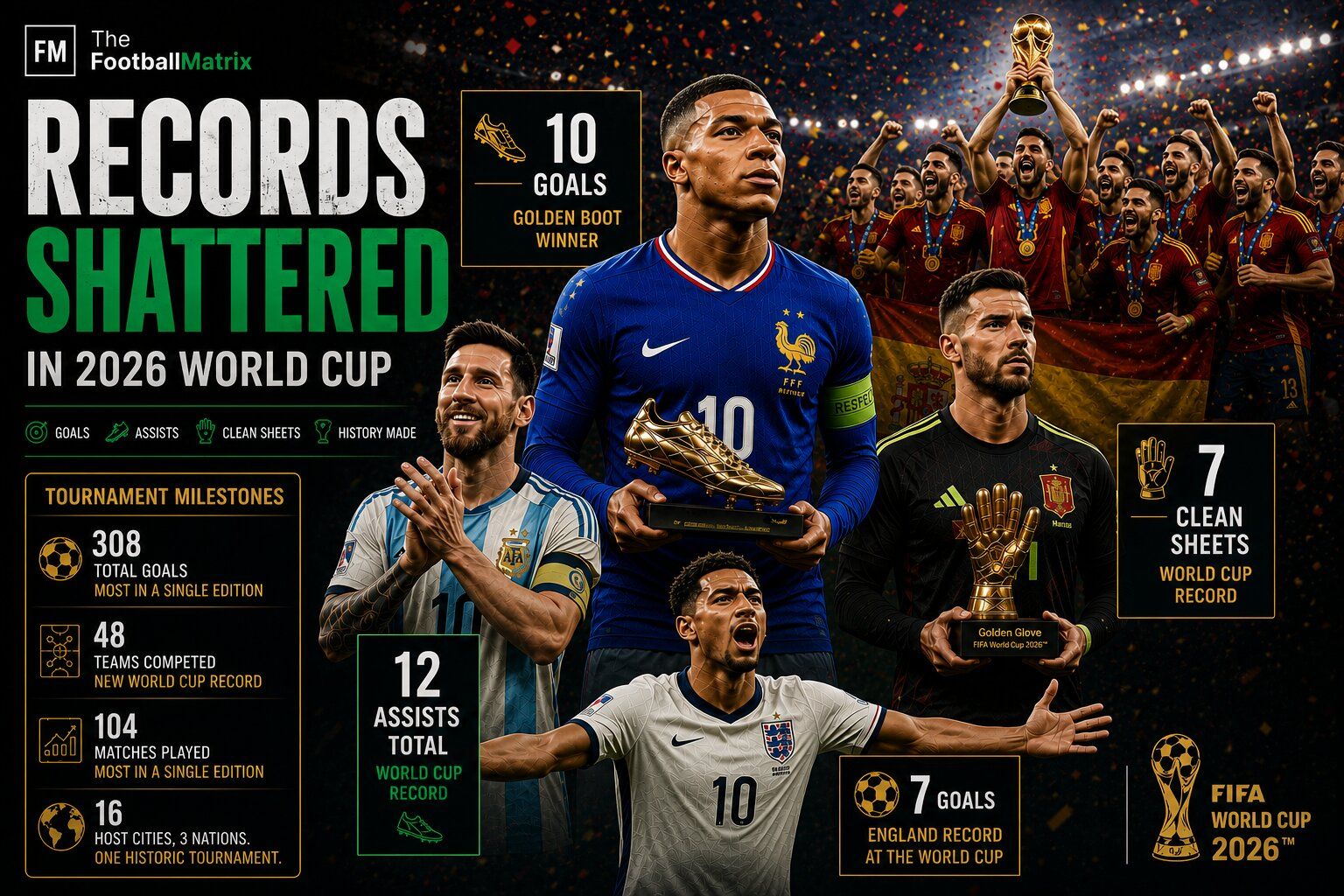
The 2026 World Cup, expanded to 48 teams, has inevitably led to increased numbers across the board — more matches, more goals, and more storylines. However, the extent to which the tournament has shattered long-standing individual and collective records is remarkable, with some benchmarks dating back to the competition's earliest editions.
A Tournament Built on a Bigger Scale
Before evaluating individual or team records, it is important to provide context. The inclusion of sixteen additional nations, the increase of forty matches, and the introduction of a third host country fundamentally altered the competition's scale — inflating several totals almost by design.
| Structural Metric | 2026 Record Baseline | Previous Historical Record | Significance / Context |
|---|---|---|---|
| Field Size Expansion | 48 Teams | 32 Teams (1998–2022) | Largest pool of competing nations in international history. |
| Total Match Volume | 104 Matches | 64 Matches (1998–2022) | Highest volume of competitive fixtures in a single cycle. |
| Geographic Hosting | 3 Host Nations | 2 Host Nations (2002) | USA, Canada, and Mexico marked the first tri-nation format. |
| Total Tournament Goals | 308 Goals | 172 Goals (2022) | All-time highest-scoring World Cup tournament overall. |
The 308-goal tally is the headline figure, easily surpassing Qatar's 172. However, with 40 additional matches on the calendar, a higher total was always likely. The more pertinent question is whether scoring rates increased, and even when accounting for the extra fixtures, this tournament stands out as one of the more attacking editions in recent memory. The expanded format not only added volume but also increased knockout jeopardy earlier on, encouraging teams to adopt more aggressive strategies.
The Individual Numbers That Redefined Greatness
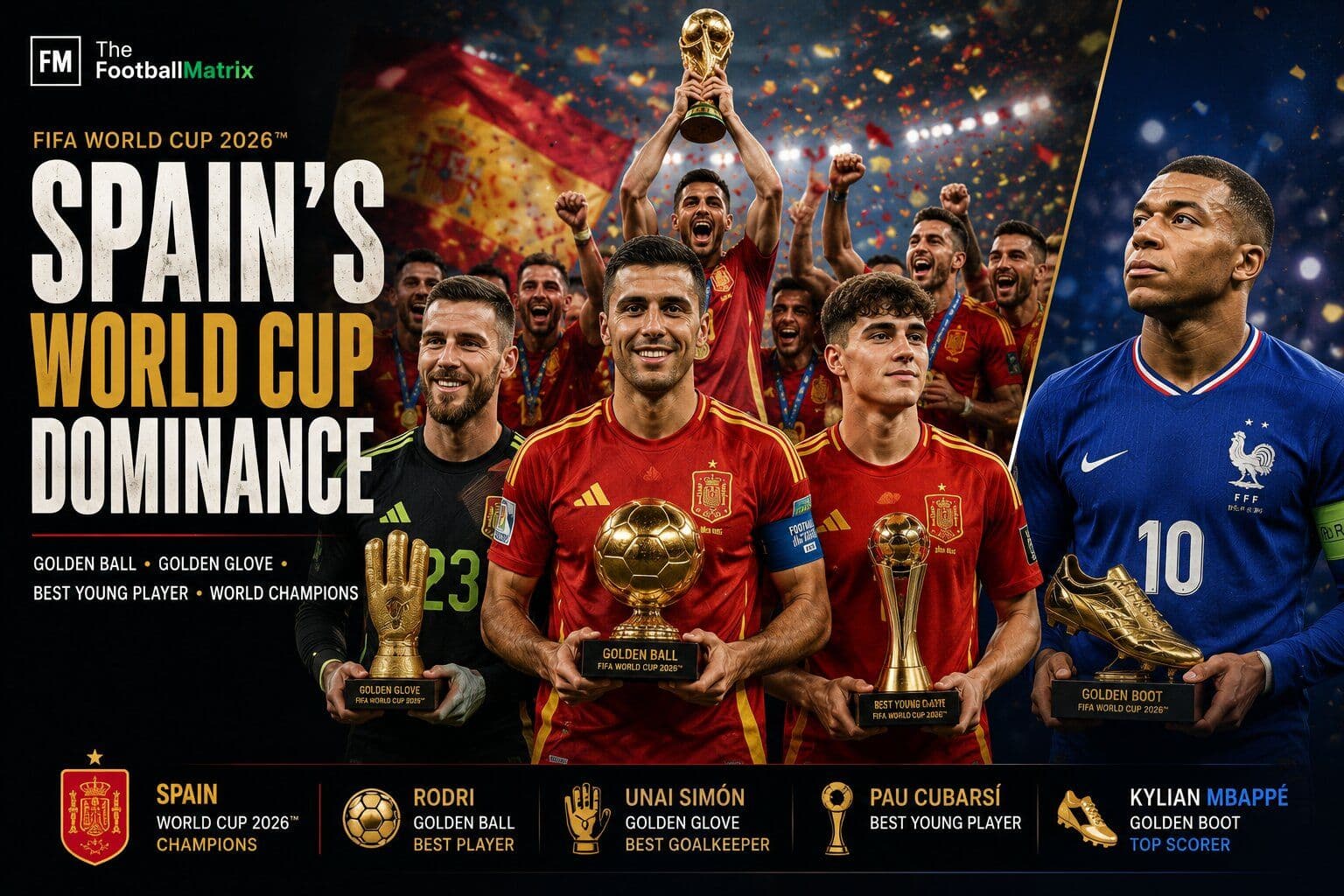
While structural expansion accounts for collective totals, it does not account for the exceptional performances of players like Kylian Mbappé, Unai Simón, and Michael Olise as these are achievements rooted in individual skill.
| Record Category | Record Holder | 2026 Statistical Line | Previous Record Line |
|---|---|---|---|
| All-Time World Cup Top Scorer | Kylian Mbappé (FRA) | 22 Career Goals | 16 Goals (Miroslav Klose, GER) |
| Back-to-Back Golden Boots | Kylian Mbappé (FRA) | 10 Goals (2026) / 8 Goals (2022) | Never achieved in the modern era |
| English Single-Tournament Peak | Jude Bellingham (ENG) | 7 Goals | 6 Goals (G. Lineker 1986 / H. Kane 2018) |
| Single-Tournament Assist Cap | Michael Olise (FRA) | 7 Assists | 6 Assists (Pelé, BRA 1970) |
| All-Time World Cup Assist Leader | Lionel Messi (ARG) | 12 Career Assists | 8 Assists (Diego Maradona, ARG) |
| Goalkeeping Shutout Runtime | Unai Simón (ESP) | 650 Consecutive Minutes | 517 Minutes (Walter Zenga, ITA 1990) |
| Single-Tournament Clean Sheets | Unai Simón (ESP) | 7 Clean Sheets | 5 Clean Sheets (Multiple Players) |
Mbappé's 22 career goals place him six ahead of Miroslav Klose's long-standing mark of 16. The significance lies not only in the total but also in the manner of his achievement. Winning consecutive Golden Boots — 8 in 2022 and 10 in 2026 — is unprecedented in the modern era, indicating that this is not merely a one-tournament peak but rather a sustained level of excellence across two cycles. Strikers typically experience a decline or plateau between World Cups, yet Mbappé's output has risen.
Jude Bellingham's seven goals surpass the previous English single-tournament benchmarks set by Gary Lineker in 1986 and Harry Kane in 2018. Notably, Bellingham achieved this from a midfield position rather than as a central striker, highlighting his evolution from box-to-box control to direct goal involvement — a trend that England’s coaching staff will have closely monitored throughout the tournament.
At the opposite end of the pitch, Unai Simón's statistics, though less frequently highlighted, are among the most impressive in this dataset. His 650 consecutive minutes without conceding surpass Walter Zenga's record from 1990 by 133 minutes, while his seven clean sheets eclipse the previous shared best by two. Spain's title defense relied heavily on defensive solidity, and Simón's record serves as statistical evidence of that foundation, earning him the Golden Glove
Messi's 12 career assists extend his own record rather than breaking someone else's — he entered the tournament already holding the mark. The gap he now has over Diego Maradona's 8 assists is substantial enough to be recognized as a distinct milestone.
The Collective Anomalies That Defined the Knockouts
While individual brilliance contributes to the tournament's narrative, the knockout rounds produced team-level statistical patterns that reflect the dynamics of specific matches rather than the performance of any single player.
| Statistical Anomaly | Match / Team Context | 2026 Data Benchmark | Historical Context / Significance |
|---|---|---|---|
| Highest-Scoring Bronze Final | France 4–6 England | 10 Combined Goals | Broke the 68-year-old record set in 1958 (France 6–3 West Germany). |
| Defensive Title Security | Spain (Champions) | 1 Goal Conceded | Tied the defensive record set by Spain in 2010. |
| First-Half Attacking Void | Argentina (vs. Spain) | 0 First-Half Shots | First time an Albiceleste side failed to record a shot in a World Cup half since 1966. |
| Lowest-Volume Final Opening | Spain vs. Argentina | 3 Combined Shots | Lowest offensive output ever tracked in the first 45 minutes of a Final. |
| French Defensive Fracture | France (vs. England) | 4 Goals Conceded (1st Half) | First time in French international history conceding 4 in a single World Cup half. |
| Disciplinary Final Fallout | Argentina (vs. Spain) | 2 Red Cards | Most expulsions logged by a finalist in normal/post-match states. |
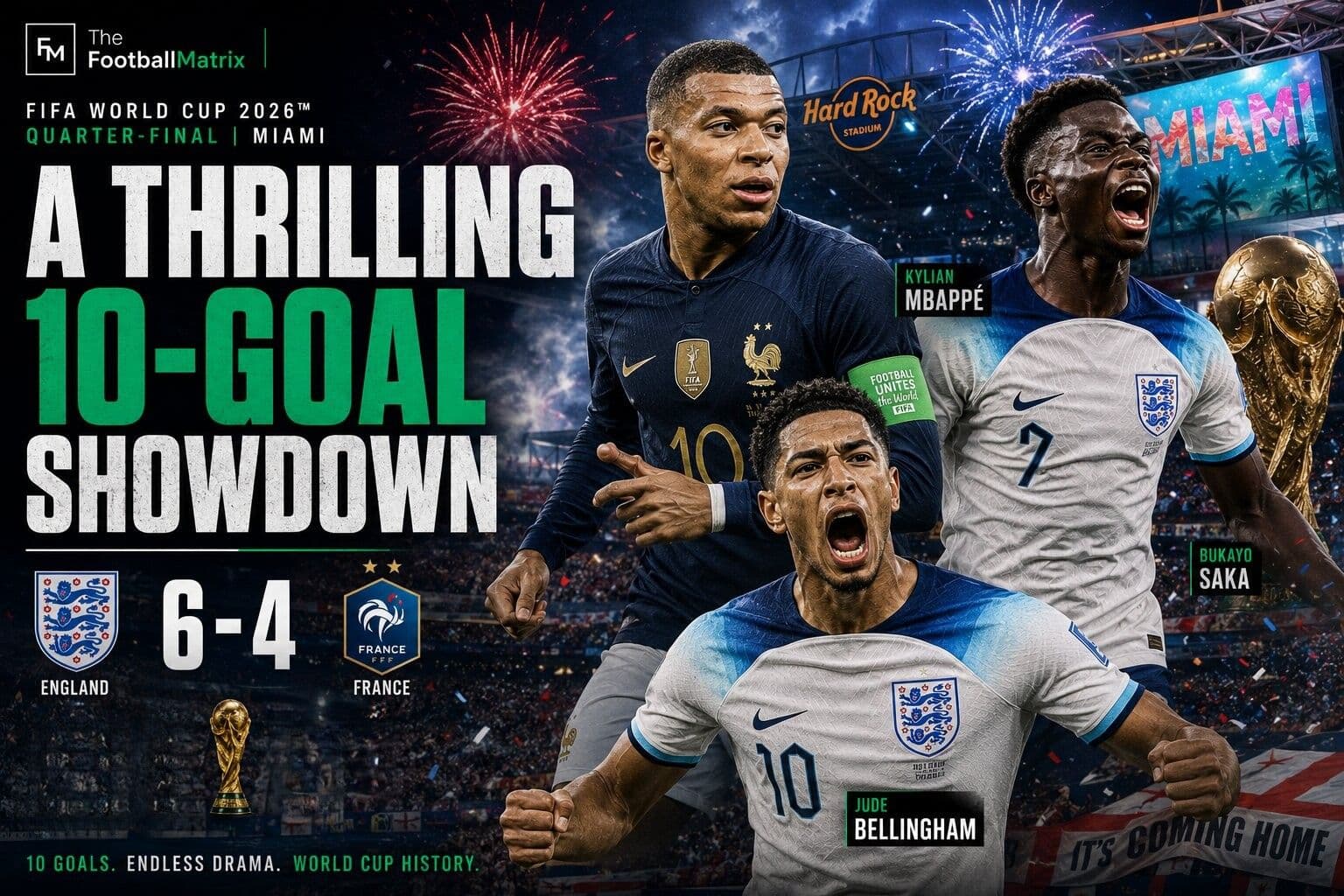
The third-place match between France and England produced ten combined goals, breaking a record that had stood since 1958. This total is difficult to reconcile with France conceding four goals in a single half — a first in the nation’s World Cup history — but the two figures are directly related. A defense already fatigued from the tournament's later stages collapsed during one period, with England capitalizing without needing a complete performance.
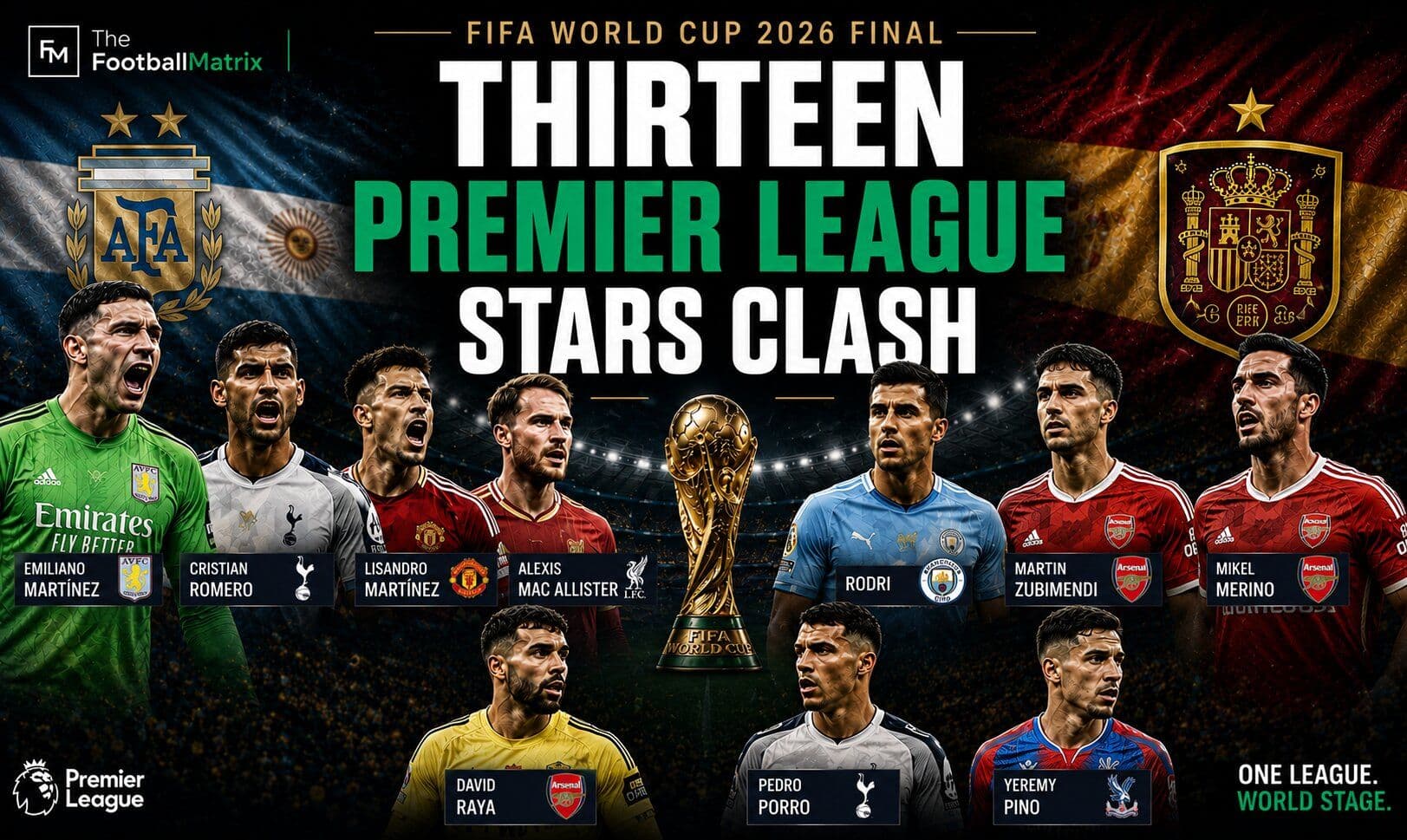
Conversely, the Final showcased a contrasting narrative. Spain's single goal conceded throughout the tournament matches their defensive record from 2010, reflecting a team strategy that made the first half of the final nearly unwatchable. The three combined shots in the opening 45 minutes represent the lowest first-half offensive output in final history, while Argentina’s failure to record a shot during that period marks their worst performance since 1966. Whether this reflects Spain's dominance or Argentina's cautious approach remains open to interpretation, but both records are significant.
The two red cards issued to Argentina represent the most disciplinary infractions recorded by a finalist in the tournament's history. Combined with the shooting statistics, this paints a picture of a final influenced as much by structural breakdowns as by attacking prowess, a rarity for a match of such significance.
What These Records Actually Mean
Not every number in this ledger carries equal weight. The totals of 308 goals and 104 matches largely result from a 48-team format, rather than indicating an overall increase in the quality of football. Context is critical, and treating scale-driven totals as pure indicators of quality would misrepresent the reality.
The individual achievements, however, stand apart. Mbappé's scoring record, Simón's shutout streak, and Bellingham's goal tally were not guaranteed by a larger tournament format; they required exceptional individual performance across seven matches of increasing difficulty. The same applies to the anomalies observed during the knockout stages, which emerged from specific tactical and psychological dynamics rather than mere tournament arithmetic.
Support The Football Matrix on Google Search
Add us as a preferred source to highlight our transfer & injury intelligence in your search results.
☕ Keep The Matrix Running
The Football Matrix is independent — no ads, no paywalls, no corporate sponsors. If our coverage adds value to your matchday, consider buying us a coffee. It goes directly toward hosting, infrastructure, and keeping the editorial free for everyone.
Discussion (0)
Loading comments...